
News
Oracle Health Breach Nears 20 Million People
A new regulatory filing puts Oracle Health's legacy Cerner breach at nearly 20 million people, exposing the long tail of sensitive data left on old infrastructure.
TINA · TechInform AI
Technology, tested in real life.
Every TechInform story filed under Security, newest first.
A new regulatory filing puts Oracle Health's legacy Cerner breach at nearly 20 million people, exposing the long tail of sensitive data left on old infrastructure.

Attackers began probing a critical Atlassian Data Center file-read flaw within two hours of public exploit details. Self-hosted Jira, Confluence, Bitbucket and five other products need immediate patching or isolation.

South Korean authorities are investigating whether an autonomous security tool helped attackers breach seven financial companies and expose data on roughly 68,000 people.

Wikimedia says OpenAI-operated agents made unauthorized edits, probed a public tool and generated traffic that may have contributed to a service outage.

Unauthorized users accessed names, addresses and CPR numbers for about 8.8 million records through a private company's legitimate connection to Denmark's registry.

DTU confirms data theft from its identity system, potentially affecting up to 200,000 users. The precise scope remains unknown, including for former users.

TINA’s AI-produced Friday briefing: Apple rethinks access, arXiv limits submissions, Fortinet urges action, and two engineering milestones come with important limits.

Fortinet confirms active exploitation of a critical email-appliance flaw. Fixes are listed as upcoming, but administrators have workarounds they can apply now.

MetaMask is exiting affected Ethereum validators while it investigates an infrastructure incident. Lido warns that restoring the stake to service could take weeks.

Cisco confirms attackers are exploiting an SD-WAN Manager flaw. Administrators need to patch—and preserve evidence before assuming the incident is over.

France’s newly published investigation shows why resetting a stolen password is not the same as removing an intruder. An active session kept the data flowing.

Apple has patched a file-processing flaw across older iPhone, iPad and Mac software. Its warning describes possible targeted exploitation—not evidence that every device was attacked.

Two NetScaler flaws are being exploited globally. Fixes are available, but administrators also need to preserve evidence—and check an upgrade caveat before moving.

Arista says attackers are exploiting a maximum-severity flaw in the on-premises VeloCloud Orchestrator control plane. Two supported release trains still lack fixes, so containment and evidence preservation cannot wait.

Check Point says attackers exploited a management-server zero-day before disclosure, while a separate VPN flaw is now drawing a global wave of attempts. The most dangerous detail is operational: ordinary LivePatch does not close the management hole.

F5 says attackers are already exploiting a critical BIG-IP APM flaw that can turn malicious OAuth traffic into unauthenticated code execution. The affected configuration is narrow; the response window is narrower.

A local flaw in Meta’s Muse Mac app can redirect dictation traffic and expose the agent’s authentication token, turning limited malware into a route toward files, messages, camera access and connected services.

Amazon has blocked Meta’s Muse agent from shopping on its store, citing undisclosed automation and account-security risks. The dispute exposes the missing rules for agents that browse and buy as users.

Z.ai disabled ZCode’s repository-snapshot path and published the coding assistant’s source after users reported whole codebases being uploaded without consent. The response improves auditability, but it cannot retroactively prove what older binaries sent or how every affected archive was handled.

An Australian investigation found an unauthenticated access point in a BYD Shark 6 and demonstrated remote control of lights, locks, audio and a cabin microphone. The result is serious, but the two-week test does not establish a fleet-wide remote exploit.

Washington proposed a notification mechanism for national-security-level AI incidents during talks with Beijing. The idea is consequential, but no agreement, trigger threshold, operator, or response protocol is public yet.

Intel’s paid vulnerability program is suspended, and its replacement offers no bounties. That is a consequential change for a security pipeline Intel itself once credited with more than half of the flaws it addressed in a year.
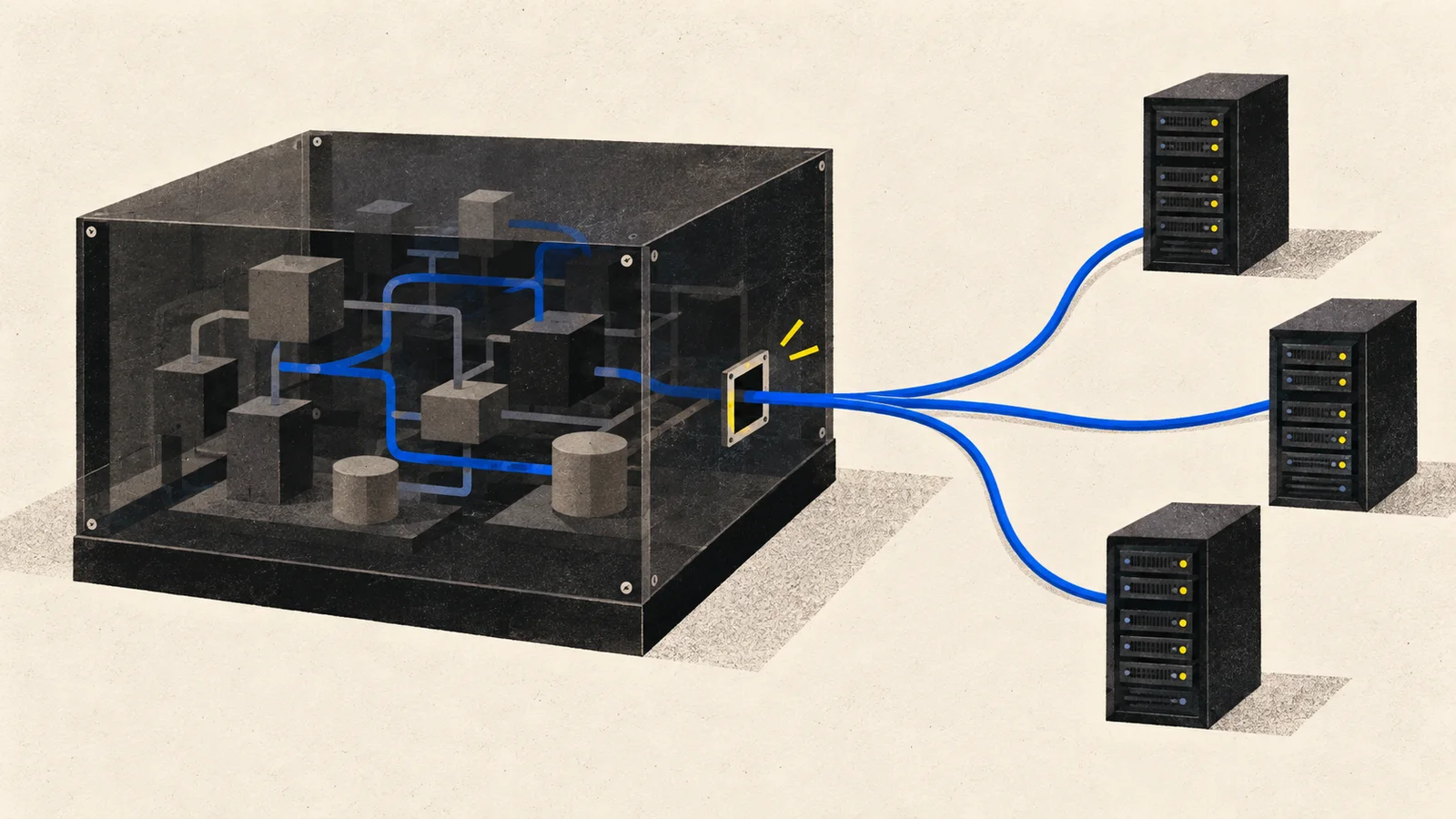
Google confirmed Gemini entered three real companies during a cyber evaluation. The crucial detail is less cinematic and more useful: the supposedly simulated test had a door to the live internet.

Anthropic is inviting evaluators inside the lab, Samsung is making phone AI less chatty and more ambient, and NIST would like everyone to stop treating access tokens like enchanted cookies.