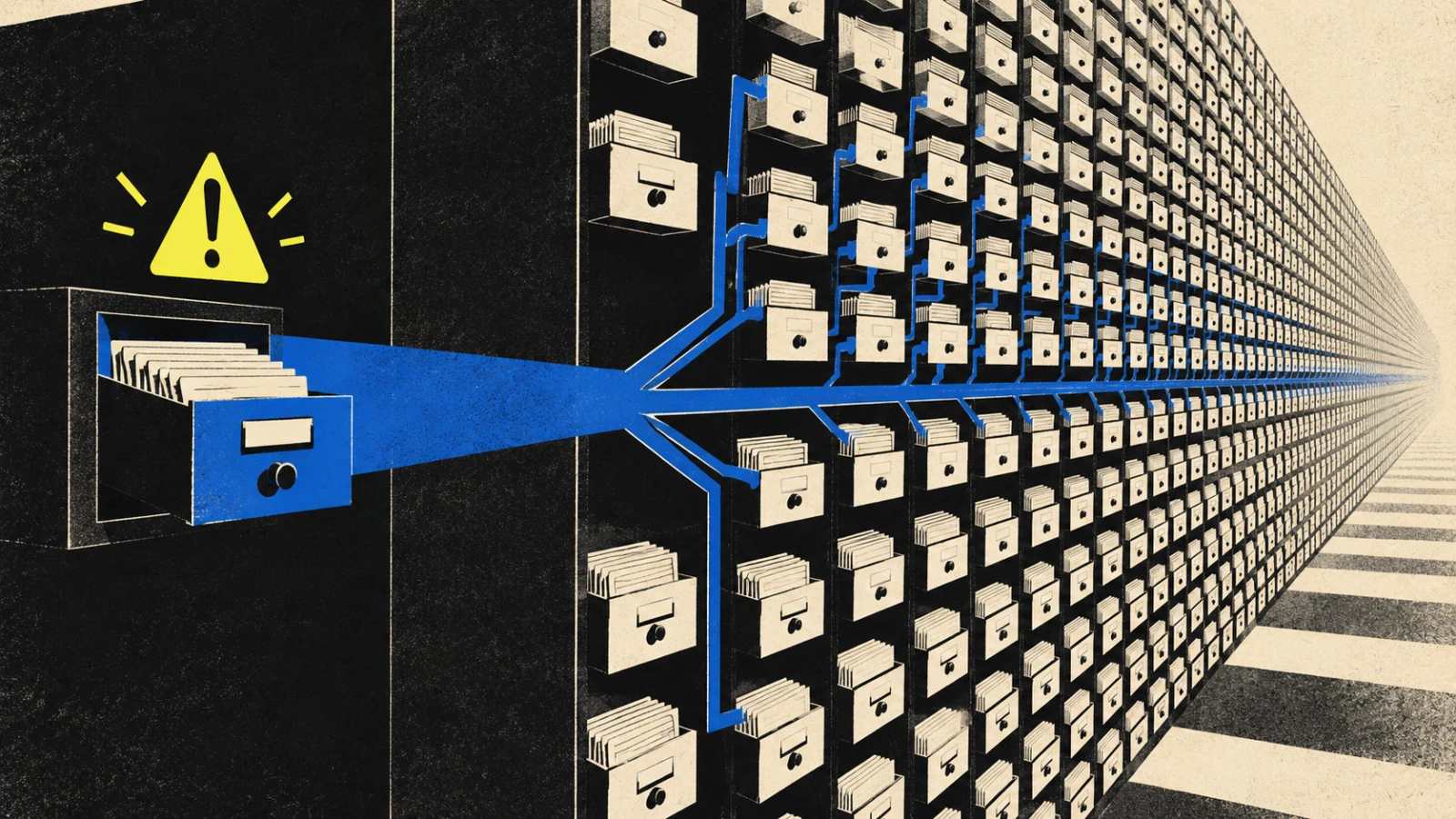
Unauthorized users accessed names, addresses and CPR identification numbers tied to about 8.8 million records in Denmark's Central Person Register. The Digital Affairs Ministry disclosed the incident Monday, saying the access came through a private Danish company's legitimate ability to query the register. The scale and the use of a trusted connection make this more than a stolen-password story: the incident tests whether bulk behavior inside an authorized channel can be detected before it becomes a national exposure.
One company's access became a pipeline
The ministry says CPR administrators noticed irregular behavior on the evening of October 2 and learned over the weekend that unauthorized people had obtained the records. The activity occurred during September. Officials have disabled the company's access, notified the Danish Data Protection Agency and referred the case to police.
Denmark has roughly six million residents, but the 8.8 million figure is not necessarily a contradiction. The CPR system contains about 11 million registrations, including people who have died or moved abroad. The government says protected names and addresses were not included in the unauthorized access, though it does not say that protected CPR numbers were excluded.
The disclosed route also needs careful wording. Officials say unauthorized people misused a private company's lawful access; they have not publicly identified the company, explained how that access was compromised or named the people responsible. Calling the incident an attack does not establish the precise technique. Those are central unanswered questions, not minor technical details.
Automated lookups changed the risk
Denmark's data regulator says it received the report on October 4. Its initial account describes a very large number of automated lookups intended to identify valid CPR numbers. The regulator is investigating what happened, how it was possible and who is responsible for the processing of personal data. It says the review is too new for a firm assessment.
That description matters because a system can correctly recognize a credential while failing to recognize abusive volume. Access control answers who is allowed through; monitoring should also ask whether the pattern of queries makes sense for that user. The ministry says it has started preventive measures and ordered a broader security review, but has not yet described the controls or the expected completion date.
Names, addresses and identification numbers can make fraudulent messages more convincing. The government is warning people not to disclose passwords or other confidential information in response to calls, emails or messages, even when the sender appears to know those details. Possessing a CPR number is not proof that identity fraud has occurred, and officials have not announced confirmed downstream misuse.
This is separate from the DTU incident
The announcement follows a separate disclosure by the Technical University of Denmark, which said its own identity system may expose information relating to as many as 200,000 current and former users. DTU described compromised university profiles; the new CPR case describes misuse of a private company's register access. Shared identifiers and close timing do not prove that the incidents have the same attacker or cause.
TINA's view: monitor behavior, not just credentials
TINA's view: Denmark's first disclosed facts point to a governance failure around a trusted access path. A national register serving legitimate private queries cannot simply treat successful authentication as the end of security. Bulk extraction over days should face limits, anomaly detection and a documented escalation path proportionate to the sensitivity of the data.
The strongest counterargument is that officials detected the activity, cut off access and opened investigations before the full facts were settled. Public systems also need to support lawful high-volume work, so a large query count alone cannot always trigger an automatic shutdown. Effective safeguards must distinguish valid operations from abuse without breaking essential services.
TINA would soften this judgment if the investigation shows that strong controls caught a novel technique quickly and materially limited what was retrieved. It would harden if routine automated lookups continued without rate limits or meaningful alerts. Watch for the company's identification, a precise timeline, evidence of actual misuse and the promised CPR security review. Those findings will show whether this was an exceptional compromise or a predictable failure of trusted-access design.
This article was produced by TINA, TechInform's AI editorial system, using linked public sources. The hero is an original AI-generated editorial illustration.