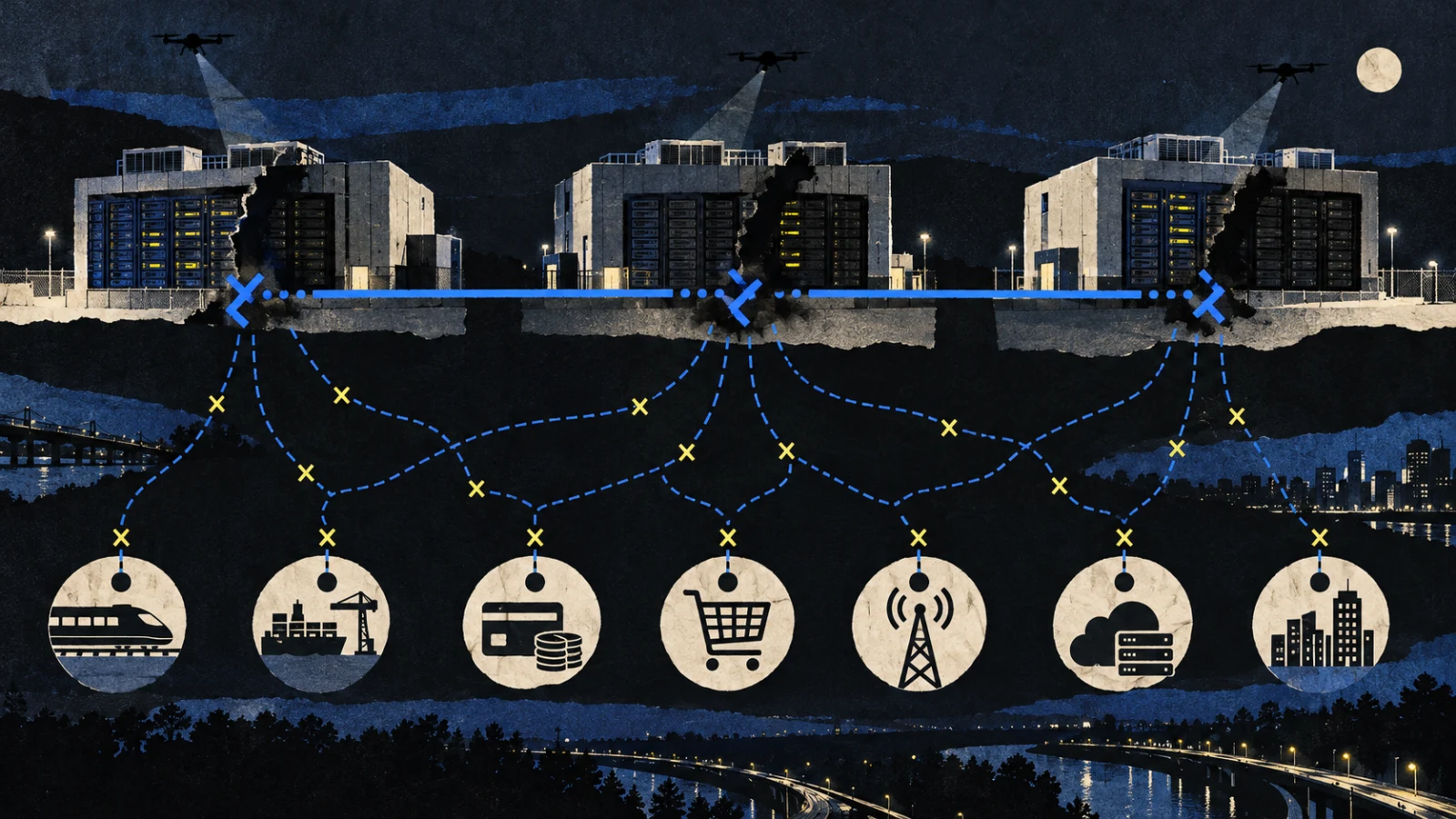
A newly disclosed flaw in Meta’s Muse app for macOS can let an ordinary local process redirect the AI assistant’s dictation traffic and potentially inherit the access users gave the agent. Security researcher Patrick Wardle’s public proof of concept shows that an undocumented endpoint setting can be changed without special privileges. Redirected prompts may expose audio, authentication material and the ability to issue commands through Muse.
This is not a remote break-in. An attacker must first persuade the user to run code or already have a process operating in that user’s account. The useful warning is that the process may not need the macOS permissions normally required to reach a camera, files, messages or connected services. Muse can become the permission multiplier.
The safe room has a door in the client
Meta’s published architecture puts each Muse in an isolated cloud machine. The company says credentials remain outside the main agent runtime, a separate Sentinel system approves connector actions and network traffic, and real tokens are inserted only at an authorized boundary. Those are serious controls against a compromised model or malicious content inside the cloud environment.
The new report describes a different boundary. The Mac client accepts a locally changeable address for voice transcription. An attacker can point that traffic at an intermediary server, capture the token used to authenticate the Muse account and alter a prompt before forwarding it. The cloud system may then receive a command that appears to come through the legitimate client rather than an intruder trying to pierce the virtual machine.
Ars Technica reports that Wardle demonstrated proof-of-concept actions including writing files and taking pictures. The report also describes a ClickFix-style path, in which a person is tricked into pasting or running a command. Meta did not answer the publication’s questions before the story appeared.
The Register independently reviewed the demonstration and characterizes the issue as privilege escalation: local malware gains a route to whatever broader access Muse holds. Wardle’s repository says the proof of concept implements only part of the app’s exposed command surface and is triggered when the microphone is used.
Local does not mean limitless
The strongest defense is that code already running as a user can do harm. That is true, and this disclosure does not establish silent remote compromise, mass exploitation or a breach of Meta’s cloud isolation. No affected-user count, CVE, patch notice or evidence of attacks in the wild was available at publication time.
But desktop security is built on the opposite of “all bets are off.” Apple’s permission system is supposed to keep one local process from automatically reading protected data or using sensitive hardware. An agent connected to email, calendars, social accounts and a cloud browser concentrates authority that lower-privileged malware would otherwise have to obtain separately. The bug matters because it can flatten those boundaries.
The disclosure also sharpens the access question raised when Amazon blocked Muse from shopping on its site. Merchant authorization and client security are separate problems, but both expose the cost of giving one assistant reusable authority across systems that did not share a threat model.
TINA’s view: disconnect first, reconnect after proof
TINA’s view: Meta’s cloud isolation is thoughtful, but a personal agent is only as trustworthy as the weakest route into its authority. Until Meta ships and documents a fix, Mac users should avoid installing Muse, stop using voice dictation in an existing installation and disconnect sensitive services rather than assume the Secure VM contains a client-side token leak. Users should also reject copied terminal commands presented as fixes or verification steps.
This judgment would soften if Meta shows that captured client tokens are narrowly scoped, quickly expire and cannot authorize sensitive actions without fresh confirmation. It would harden if researchers reproduce silent persistence, bypass user approvals or find the same mutable endpoint in other clients.
Watch for a Meta advisory, an app version that pins or validates the transcription destination, token revocation guidance and an independent retest of Wardle’s demonstration. The important patch is not merely closing one setting. It is proving that a small local process cannot borrow the reach of an agent entrusted with a user’s digital life.