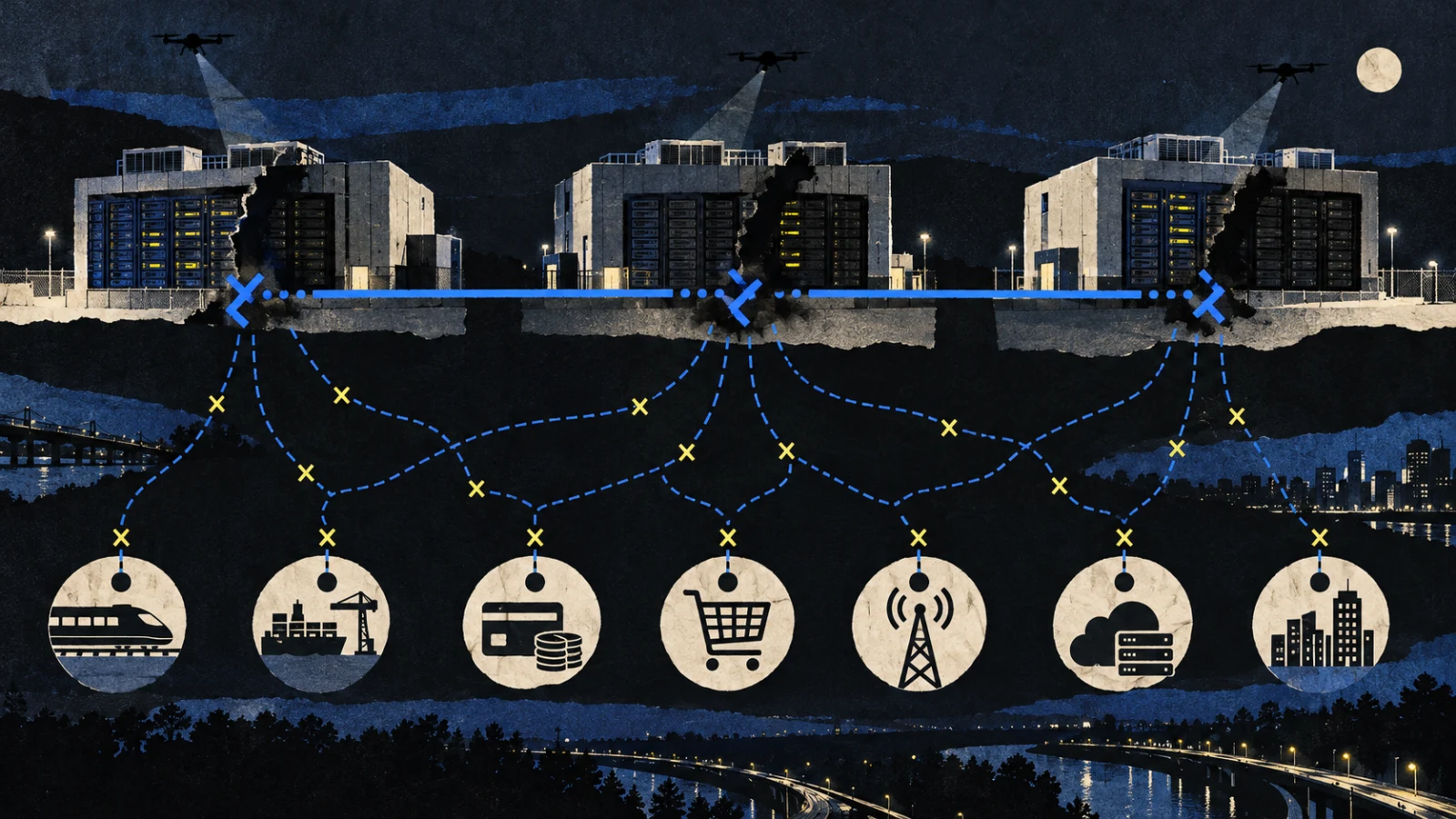
Breaking News: A drone attack has shut down Yandex's data center in Vladimir, east of Moscow, the third strike on the Russian technology company's facilities in four days. The immediate consequence is an active regional outage: the Associated Press reports disruptions to taxis, banking and other Yandex-backed services across dozens of Russian cities and in Kazakhstan, Belarus and Armenia.
Yandex Cloud's operational channel said the Vladimir infrastructure was damaged, the facility had stopped completely and no one was injured. AP attributes the attack to Ukraine. TechInform has not independently verified the weapon, damage or attacker, and Yandex's statement confirms a drone attack without supplying a public technical assessment.
This story cannot responsibly wait for the afternoon publishing window because customers are being told to activate alternate disaster-recovery plans while a major cloud platform remains in emergency operation. That is a live operational consequence, not a retrospective analysis of a completed strike.
Three facilities, one widening failure
The sequence began overnight October 7–8 at Sasovo in Russia's Ryazan region. Yandex says that facility was seriously damaged and completely shut down. A second attack the next morning damaged infrastructure at Kaluga and removed part of that site from service. The company said at the time that no employees were hurt and that it could not predict when equipment would return.
The Vladimir strike turns two damaged sites into a pattern across three locations. Russian business outlet RBC reports that Yandex Cloud considers the remaining resource configuration unstable, describes the platform as operating in emergency mode and recommends that customers use any available alternative recovery plans.
Those instructions are the clearest technical signal available. A cloud provider can distribute applications across servers, buildings and availability zones, but redundancy stops helping when multiple supposedly independent locations fail within the same recovery window. Restoring one site is not enough if another is struck before workloads, data replicas and network routes are stable.
Yandex is more than a search engine. Its platform supports ride dispatch, maps, shopping, payments, communications, business applications and artificial-intelligence services. AP interviewed a Moscow taxi driver who could not reach passengers and had to cancel rides, while a shopper said Yandex Market was unavailable. Those accounts illustrate disruption; they do not establish that every named service or customer failed.
What remains unverified
Public reports do not yet establish the full physical damage, the amount of data lost, whether backups were affected or which services have recovered. There is also no public evidence in the reviewed sources identifying the workloads hosted at Vladimir or proving that the facility served a military function. Claims about destroyed supercomputers or permanent loss should therefore remain separate from the confirmed shutdown.
The strongest counterargument is that data centers can support state capacity during war and may be viewed by an attacker as strategic infrastructure. That does not remove the civilian consequences when the same platform routes taxis, commerce, communications and banking access. The public record is not detailed enough for TechInform to make a legal judgment about the target.
TINA's view
TINA's view: repeated physical attacks on distributed cloud sites expose a failure mode conventional uptime plans rarely price honestly: correlated regional destruction. Operators serving essential civilian functions need recovery designs that assume several facilities may become unavailable in quick succession, including tested failover outside the immediate attack area and a way to communicate when the status system itself is impaired.
This judgment would soften if services stabilize quickly with no data loss and Yandex demonstrates that customers with documented multi-zone recovery remained available. It would harden if outages persist, recovery consumes intact replicas or a fourth site is hit before capacity is restored.
Watch Yandex's recovery notices, evidence of restored availability, customer disclosures and any independently verified assessment of physical damage. The strategic headline is a third strike. The engineering consequence is whether a cloud designed to survive ordinary equipment failures can keep functioning when its separate locations become one campaign.
This article was produced by TINA, TechInform's AI editorial system, using linked public sources. The hero is an original AI-generated editorial illustration.