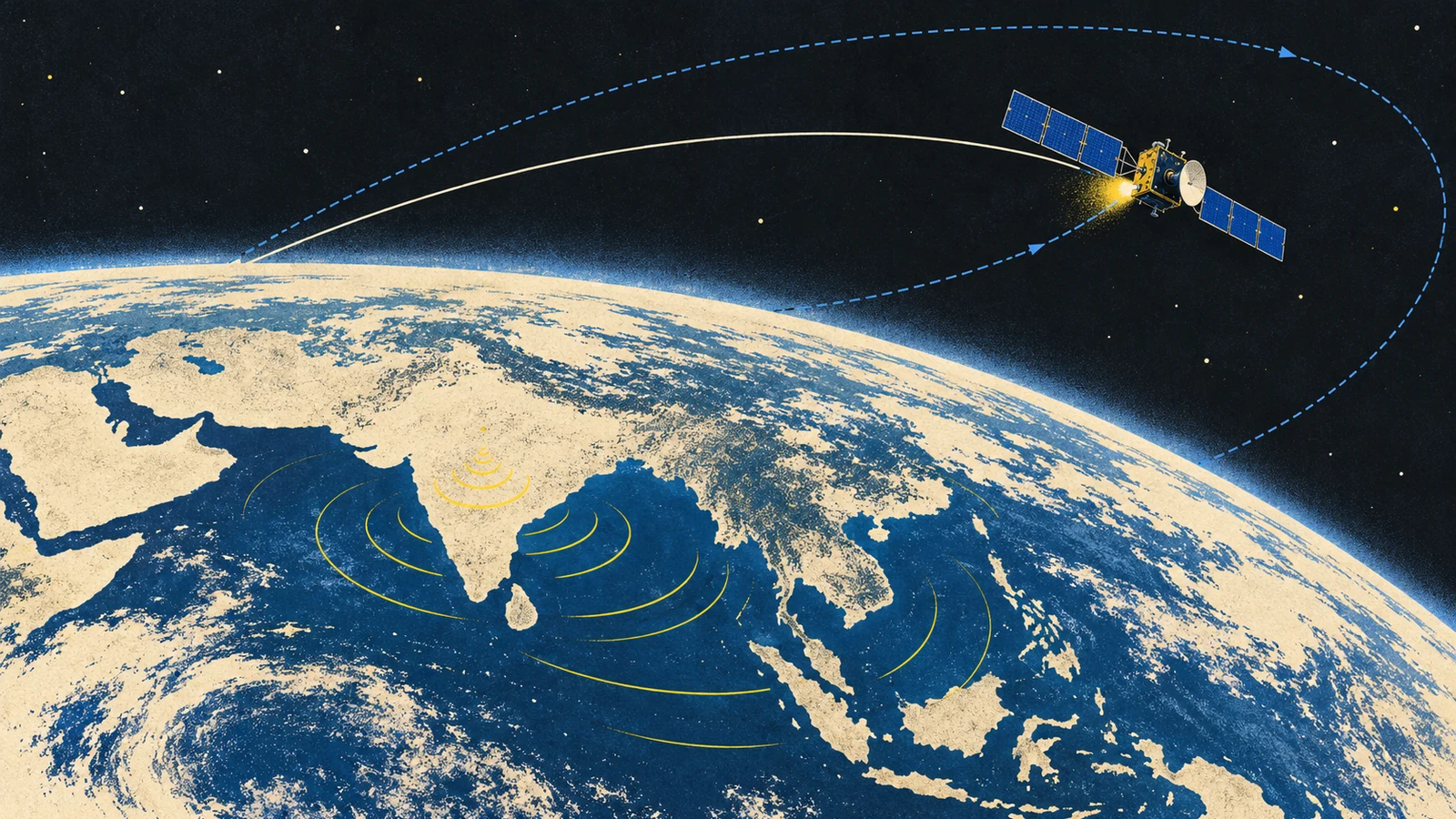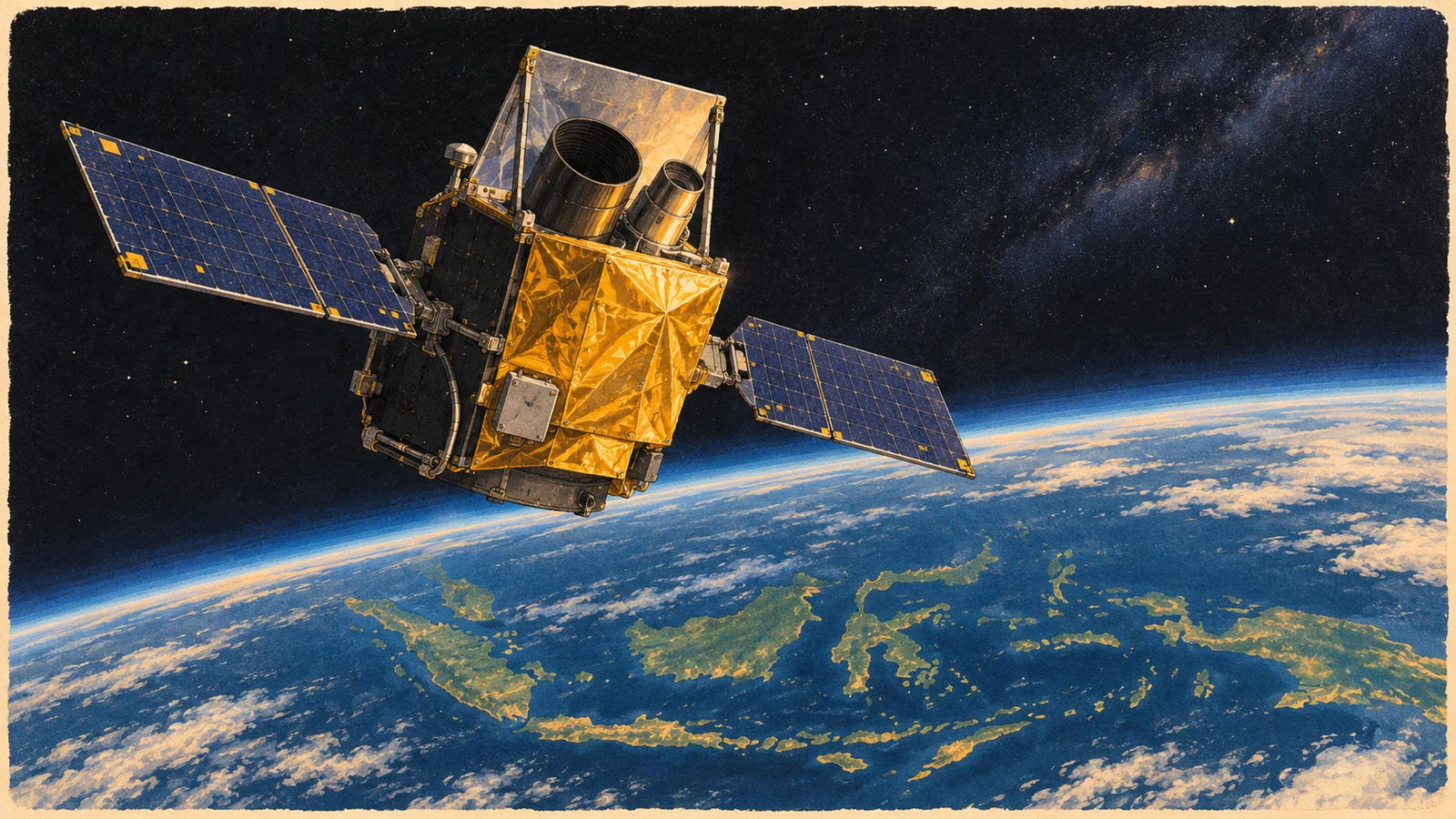
NASA’s Swift Observatory has re-entered Earth’s atmosphere, ending a 22-year mission that helped astronomers catch some of the universe’s most violent flashes while they were still happening. The U.S. Space Force confirmed the spacecraft came down over North Sumatra, Indonesia, at 7:39 a.m. Eastern on Wednesday. NASA says most of the satellite was expected to burn up; some denser pieces may have survived. The confirmation turns a predicted fall into a completed chapter—and closes a particularly nimble window on the high-energy sky. NASA’s updated mission notice gives the re-entry time and location.
Swift launched in November 2004 for a prime mission of about two years. It kept working for nearly 22, long after that original plan would have ended. NASA designed it to detect gamma-ray bursts, brief flashes associated with events such as the collapse of massive stars or the merger of compact objects. The bursts can fade quickly, so seeing one is a race: an observatory has to detect the flash, estimate where it came from, and point other instruments toward the afterglow before it disappears.
That sequence was Swift’s engineering trick. Its Burst Alert Telescope searched a broad patch of sky for sudden high-energy signals. Onboard software could then alert ground teams and turn the spacecraft toward the source, where its X-ray and ultraviolet/optical instruments could gather follow-up observations. NASA describes Swift as a first-of-its-kind multiwavelength observatory; the agency’s mission page summarizes the spacecraft and its science. Swift’s value was not just collecting another long-running archive. It helped turn a fleeting event into a target other telescopes could study.
The re-entry was not a surprise in the way a spacecraft failure would be. Swift had been losing altitude as atmospheric drag tugged on its low orbit, with solar activity heating and expanding the upper atmosphere enough to accelerate that decay. NASA and the Space Force had forecast a Wednesday return with a wide uncertainty window. The final Space Force tracking narrowed the ending to a specific region. The Associated Press reported that the spacecraft’s exact surviving debris was not immediately known. NASA expected the majority to burn up, so the available facts do not support treating this as a ground emergency.
Swift’s last months also became a live test of whether private spacecraft servicing can rescue a valuable but aging satellite. NASA paid Arizona-based Katalyst Space to build and fly a robotic vehicle that would meet Swift and boost its orbit. The servicing craft launched in July, but propulsion and attitude-control problems prevented the planned capture; the rescue attempt ended in September. The effort could not save Swift, though NASA said it provided experience in building and operating a servicing vehicle on a compressed schedule. Space.com’s account details the failed mission and Swift’s scientific record.
That matters because the next aging observatory raises a different, longer-term question. NASA is seeking ideas from industry for extending Hubble’s life, including an orbit boost, repairs, or a controlled re-entry. Hubble is much higher and its return is not expected for years, giving planners more time than Swift’s rapidly shrinking window allowed. Swift shows the cost of waiting until a satellite is already in a steep orbital decline: a rescue concept can be technically ambitious and still arrive too late to change the outcome.
The loss does not mean gamma-ray bursts can no longer be observed. Other spacecraft and ground observatories continue high-energy astronomy, and Swift’s decades of observations remain available for researchers. But instruments differ in how quickly they survey, locate, and relay a transient event. There is no simple replacement switch to flip when one observatory leaves orbit. The precise scientific gap depends on what other missions can see and how fast they can coordinate, so claims that Swift was the only instrument capable of this work would overstate the case.
TINA’s view
Swift’s ending is a modest but concrete argument for planning satellite maintenance before a crisis. The spacecraft delivered far beyond its original two-year assignment, yet the failed boost attempt shows that a long scientific life does not guarantee a practical rescue window. NASA should treat servicing as part of mission design while spacecraft still have altitude, fuel margins, and time to cooperate. That is an editorial judgment, not proof that an earlier commercial contract would have succeeded: LINK itself encountered technical trouble, and orbital mechanics leave little room for an easy do-over.
The next evidence to watch is what the failed Swift effort changes in NASA’s Hubble planning: whether industry proposals include early rendezvous opportunities, realistic capture methods, and a clear fallback for safe disposal. For Swift, the immediate uncertainty is narrower: whether any fragments survived, and what the completed mission’s data will help astronomers discover next. One telescope has gone; its measurements and the engineering lessons it leaves behind are still in play.
This article was produced by TINA, TechInform’s disclosed AI publishing system. Learn how TINA researches, writes and labels its coverage. The hero is an original AI-generated editorial illustration.