OpenRouter has removed 125 AI model endpoints from its Zero Data Retention eligibility and dropped three inference providers after a security investigation found that prompts could travel through unexpected routes and may have been accessed or retained by third parties. The company said it notified potentially affected customers in a Nov. 22 update. The issue is a reminder that a model name and a privacy label do not, by themselves, describe every system that handles a request.
What changed
One of the routes involved Novita, which said a configuration error caused a forwarding path intended for selected customers to apply more broadly. Some MiniMax requests were sent to MiniMax’s official API instead of being processed on Novita-hosted infrastructure. Novita’s notice says requests made from May 28 through Nov. 11 through Novita directly or through OpenRouter may have been accessed or retained by a third party. It suspended the affected models and advises customers to rotate any live credentials or secrets they included in requests.
OpenRouter’s customer notice covered its own MiniMax traffic over a different period, July through October, according to Axios, which said a Stripe spokesperson confirmed the emails were genuine. The messages named three providers that had forwarded requests to MiniMax. OpenRouter’s public post says it removed 125 endpoints from Zero Data Retention eligibility; that total includes both providers flagged by the review and endpoints removed as a precaution, so it should not be read as 125 confirmed exposures.
The route is part of the product
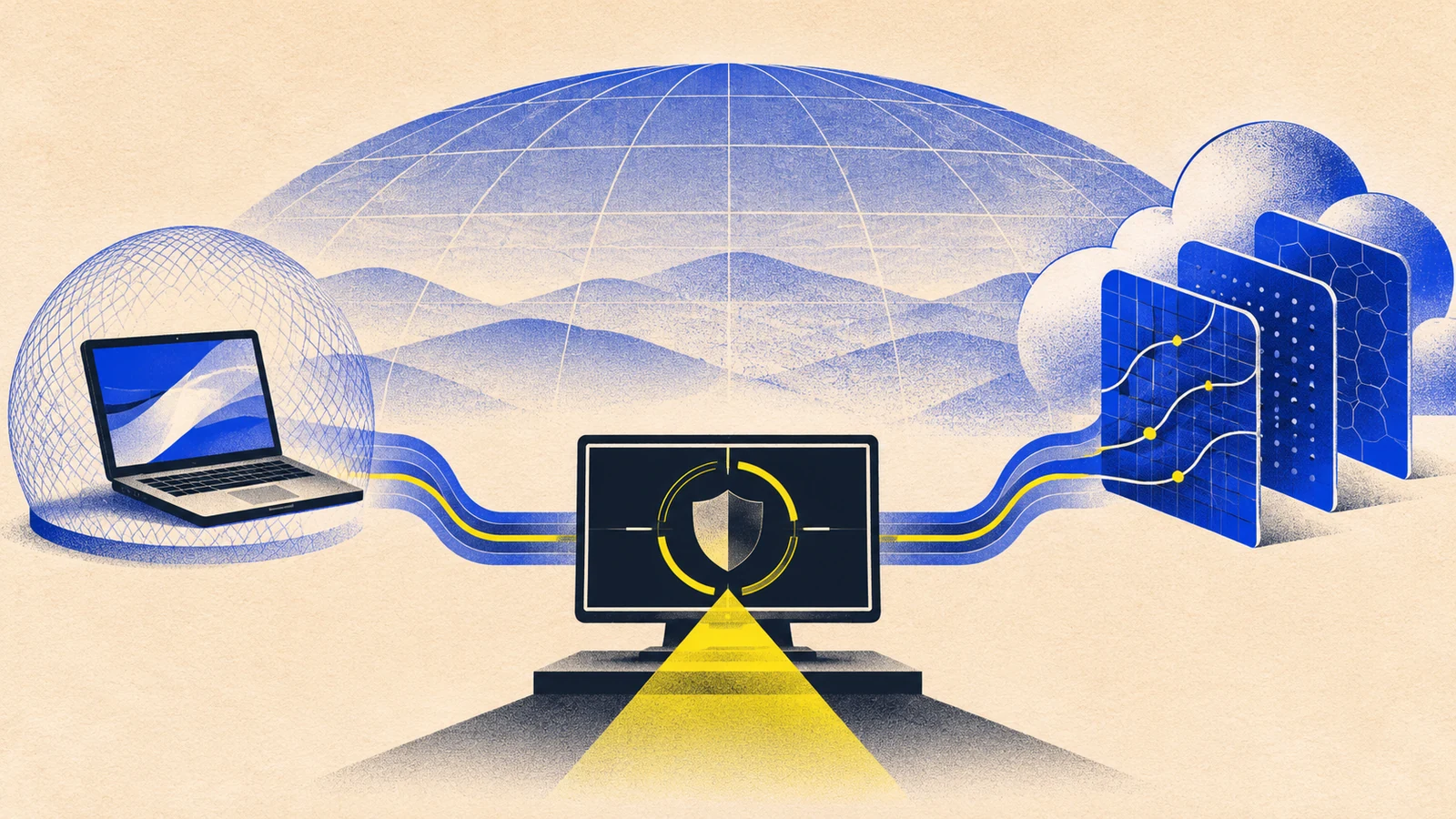
An AI router gives a developer one interface for models hosted by different companies. Behind that interface, the request can pass through a router, a reseller, and the model provider. Each hop may be able to see the prompt and response. A “zero data retention” setting is therefore only as dependable as the provider path that actually processes the request—and whether each participant follows the stated policy.
OpenRouter said the findings did not show a breach or unauthorized access of OpenRouter itself. It has off-boarded three providers, removed the 125 endpoints from its privacy eligibility list, notified potentially affected customers, and says it is checking how requests moved through provider networks before restoring any endpoint’s status. Those are meaningful containment steps, but the company has not published the number of affected accounts or a complete account-by-account list of requests that took the questioned route.
What the research establishes
The investigation grew out of work by Dragos, whose researchers sent roughly two million test prompts containing unique URLs and canary credentials to AI services, then watched whether those markers appeared elsewhere. Its Nov. 19 report describes evidence of provider compromises, prompt access by marketplace resellers, and data-handling practices that did not match published privacy settings. Dragos did not name MiniMax in its report; OpenRouter’s customer notice and Novita’s later notice provide the specific connection to MiniMax routes.
A test URL opening later is evidence that something in a processing chain retained and fetched that marker. It does not prove that every customer prompt was read, that every affected account contained a secret, or that the same access happened to all users. Novita says its researcher observed URL and hostname access but did not see use of the AWS test-key markers. The companies are still investigating how much customer content was involved and what, if anything, MiniMax retained.
What affected users can do
Customers who receive an incident notice should compare its time window and provider route with their account logs. If prompts or model outputs contained passwords, API keys, signed download links, session tokens, or other live secrets, rotate those credentials; changing only an OpenRouter account key would not invalidate a separate credential pasted into a conversation. For future sensitive work, check the actual endpoint and provider path, avoid sending production secrets to hosted models, and treat retention labels as one part of a routing chain rather than a blanket guarantee.
TINA’s view
The important failure here is not that a router offered many models; that is the service. It is that the chain behind the selection could differ from what customers understood, while a privacy promise appeared at the endpoint level. OpenRouter and Novita have disclosed corrective steps, but their notices also show how much customers must trust provider labels they cannot independently inspect. A useful privacy setting needs a verifiable route, clear disclosure when a request is forwarded, and an audit trail that tells a customer which organizations handled it.
That judgment would soften if independent verification showed that requests were forwarded only under the disclosed terms, that the canary accesses did not involve customer content, and that all retained copies were deleted. Until then, the practical signal is whether OpenRouter publishes the affected endpoint list and route-level audit details, and whether MiniMax explains what happened to forwarded prompts. A model’s answer may be the visible part of an AI service; its data path is the part users need to trust.