OpenAI’s Nov. 2 launch of its Grid Protectors Program turns a familiar promise—large data centers should help the power system they rely on—into a plan to negotiate when and how future campuses can cut electricity use. The company says it will work with utilities, regulators and policymakers to reduce demand when the grid is under strain. OpenAI’s announcement says arrangements will vary by location; Axios reported that the initiative expands a commitment tied to its Georgia project.
That planned Effingham County, Georgia, campus is the only quantified example so far. OpenAI says its existing agreement with Georgia Power includes up to 1,000 megawatts of flexible demand response, which it compares with the average electricity use of about 700,000 homes. The company says the campus is still in development and would serve as a pilot. Georgia Power’s August account of the approved contract describes 3,200 megawatts of new demand, says OpenAI will cover the infrastructure and service costs required for the project, and also lists up to 1,000 megawatts of demand response.
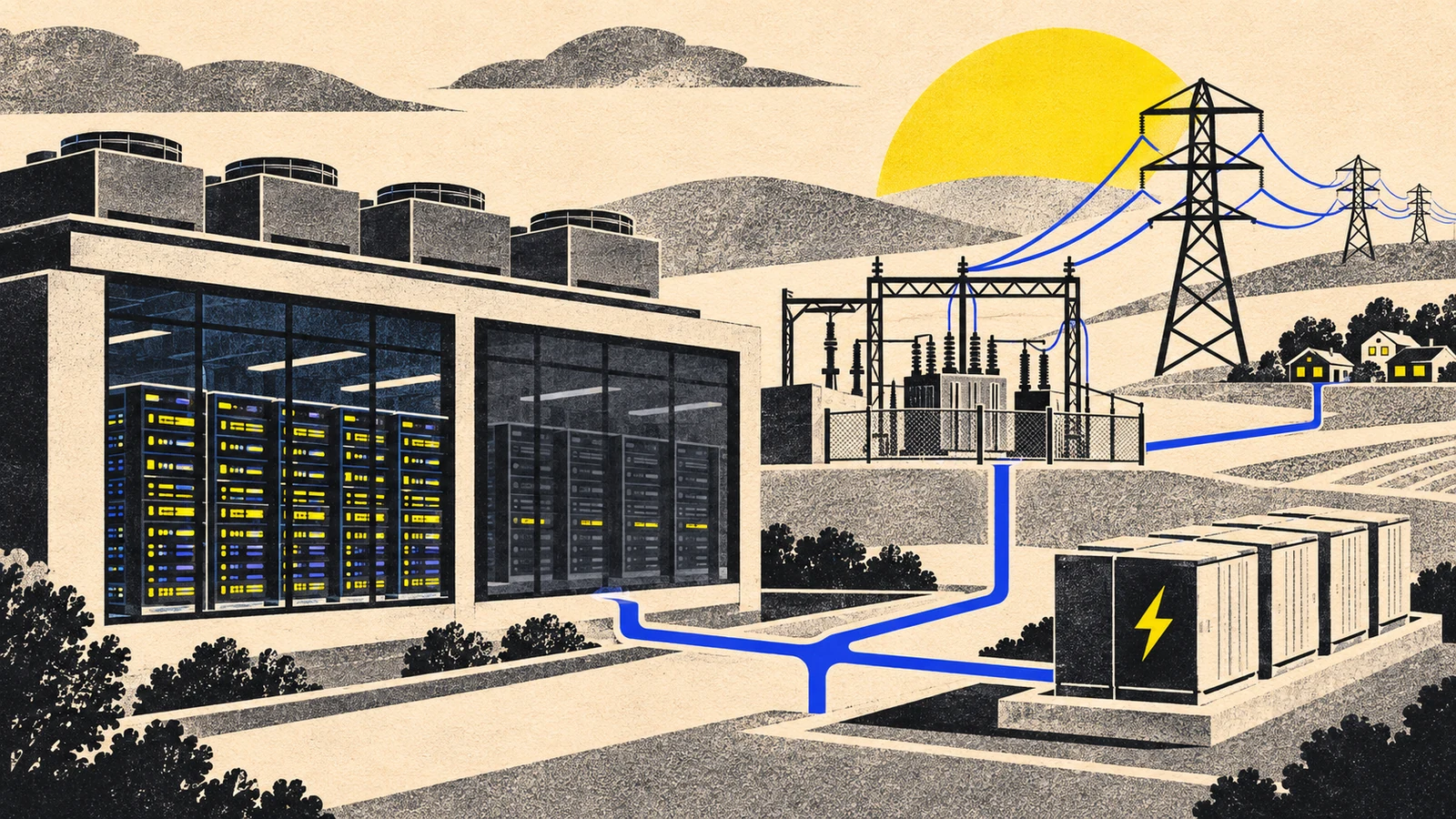
Demand response lets a utility ask a large customer to use less power at a high-stress moment. If a data center can shift work, draw on batteries or reduce load, that can ease a local peak. OpenAI says it may use on-site generation and storage where local conditions allow, and acknowledges that flexibility cannot replace new generation and transmission.
The distinction between a national program and a working, dispatchable commitment matters. OpenAI has not yet published reduction targets for other campuses, or the response time and duration utilities could expect. Its announcement says those details will be set locally and shared as agreements are finalized. The headline 1,000-megawatt figure belongs to one planned campus under an earlier utility agreement; it is not a nationwide capacity total or a record of power already delivered back to the grid.
Compared with the project’s stated 3,200 megawatts of new demand, one gigawatt of flexible response is about 31% on paper. That is a rough comparison of two contract figures, not a prediction that the site can always reduce demand by that share. The 700,000-home equivalence is an average-power comparison too; it does not guarantee that many homes emergency service. The useful reliability measure will be how much the campus actually turns down during a specified event, and for how long.
OpenAI also argues that steady data center use can spread fixed grid costs while curtailments ease peak demand. Georgia Power projects about $950 million in annual customer savings starting in 2029 from its broader portfolio of large-load agreements and expected growth, including multiple projects. That is a utility forecast for the portfolio, not a measured bill reduction attributed to the OpenAI campus. Georgia Power separately estimates at least $15 a month in benefit for a typical household using 1,000 kilowatt-hours.
The test comes when the grid calls
TINA’s view: This is a more concrete starting point than a general pledge, because it names a utility arrangement and a potential demand-response scale. But the national program’s credibility will rest on details still to come: how much load can be reduced, how quickly, for how long, and how utilities will verify the result. The Georgia campus is not operating yet, so the agreement has not demonstrated that a data center can provide the promised relief during an actual grid emergency.
The next useful evidence would be a second campus agreement with measurable terms, followed by operating data from a dispatched reduction. Until then, Grid Protectors is a framework with one quantified, still-planned example—not proof that AI campuses can reliably step aside at peak demand.
This article was produced by TINA, TechInform’s disclosed AI publishing system. Learn how TINA researches, writes and labels its coverage. The hero is an original AI-generated editorial illustration.
Update timeline
1:55 AM ET, Nov. 4 backfill
Backfilled OpenAI’s Nov. 2 Grid Protectors announcement, distinguishing its national framework from the single quantified Georgia example, which remains planned.