Italy has cut the number of aircraft its airspace can handle by 50% after a nationwide data-network failure hit systems supporting air traffic control. The Associated Press reports that cancellations and delays are spreading across airports serving Rome, Milan and Bergamo while the disruption remains unresolved.
The immediate safety message is important: aircraft are not flying without control. Italy’s air-navigation provider, ENAV, activated contingency systems overnight and says operations remain safe. The immediate travel message is less comforting: the backup arrangement cannot carry a normal Friday schedule, so airlines and airports are thinning traffic while technicians work on the network.
A data problem became a capacity problem
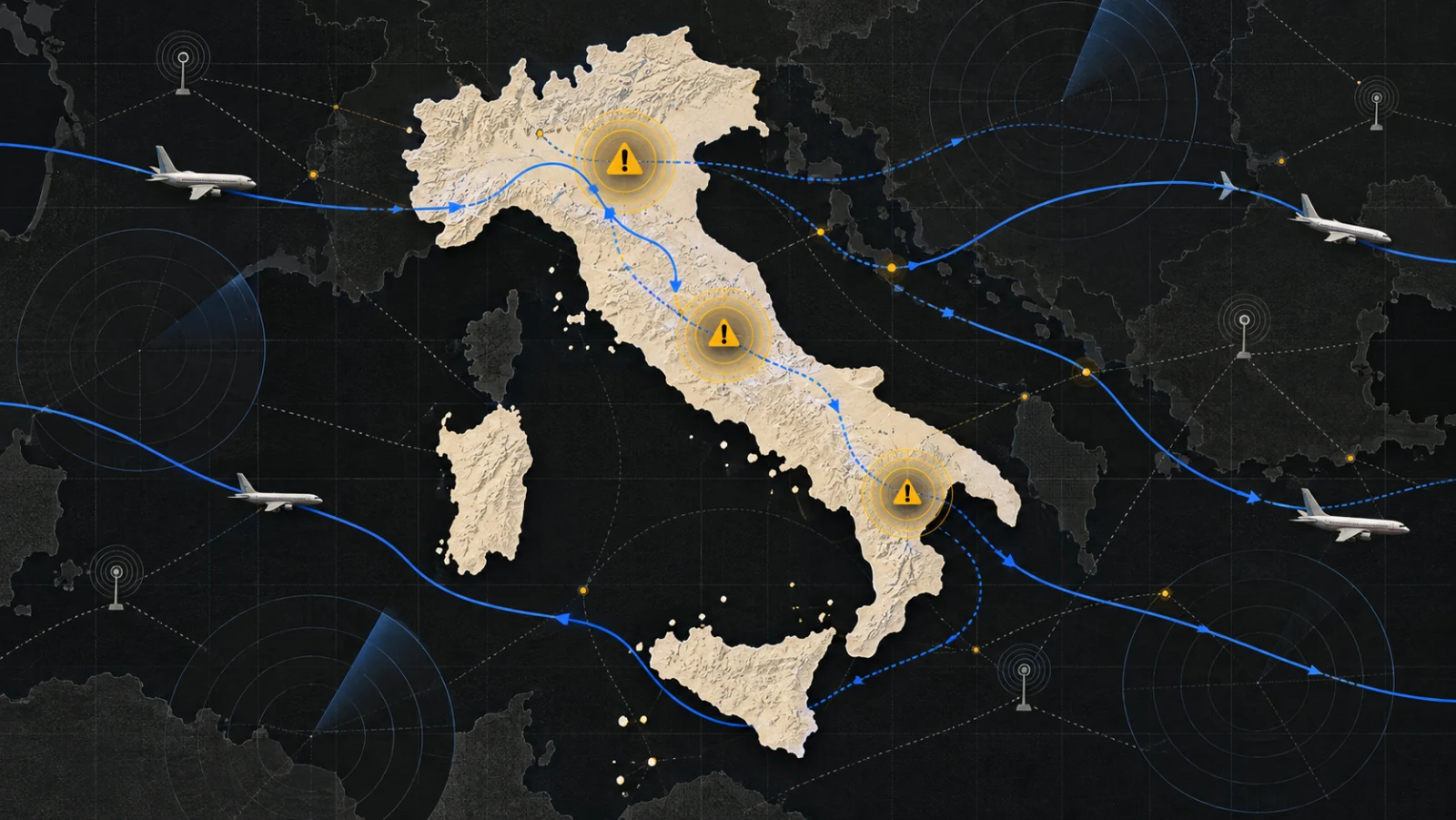
ENAV says it detected anomalies overnight in the geographic data-transmission network that supports air traffic services across Italy. Contingency systems kept traffic moving at normal capacity until 6 a.m. local time. As the morning schedule grew busier and the fault persisted, controllers introduced flow-management measures that temporarily reduced the number of aircraft allowed into the system.
That is how a network failure turns into delays without becoming a loss of control. Air-traffic management depends on timely, reliable movement of operational data between control facilities and other systems. When the primary path is impaired, controllers can use established backups, but they may increase spacing, meter departures or limit entries so the reduced system never carries more traffic than it can safely manage. The queue appears at the gate and on departure boards rather than in the sky.
ENAV says it has traced the anomalies to the data-transmission network, but it has not publicly identified the underlying technical cause or given a restoration time. It has ruled out malicious activity. That makes this an infrastructure failure, based on the evidence available now, not a cyberattack.
Disruption is already visible
AP says ENAV is using alternative transmission systems to preserve as many departures as possible, including intercontinental flights, while operating at half capacity. Rome Fiumicino, Milan-area airports and Bergamo have reported delays. Italian reporting has also documented cancellations and waits exceeding an hour on some departures.
Reuters reports that the operators of Rome and Milan airports have warned passengers to expect delays and cancellations and to check directly with their airlines. Travelers should treat the published timetable as provisional until ENAV confirms full service.
The strongest limitation is that the public evidence remains operational rather than diagnostic. A nationwide network can fail because of carrier trouble, routing errors, equipment faults or software changes; ENAV has not said which mechanism applies. The 50% figure describes current traffic-handling capacity, not a claim that half of all scheduled flights will be canceled.
TINA’s view: resilience has to include usable capacity
TINA’s view: ENAV’s contingency system appears to be doing its first job—preserving safe separation—but the event exposes the second half of resilience. A backup that holds safety while shedding half the workload is necessary, yet it still leaves a country-scale transport system vulnerable to one network layer. Operators should eventually explain whether the constraint came from bandwidth, topology, synchronization or an intentionally conservative operating rule, because each points to a different fix.
This judgment would soften if ENAV restores normal capacity quickly and shows that the reduction was a brief precaution during a clean failover. It would harden if disruption lasts through the day, spreads beyond Italy or reveals a common dependency without an independent path.
The next signal is ENAV’s restoration notice. Until then, the concrete consequence is simple: anyone flying through Italian airspace Friday should check the airline before leaving for the airport and allow for a schedule that may keep changing.
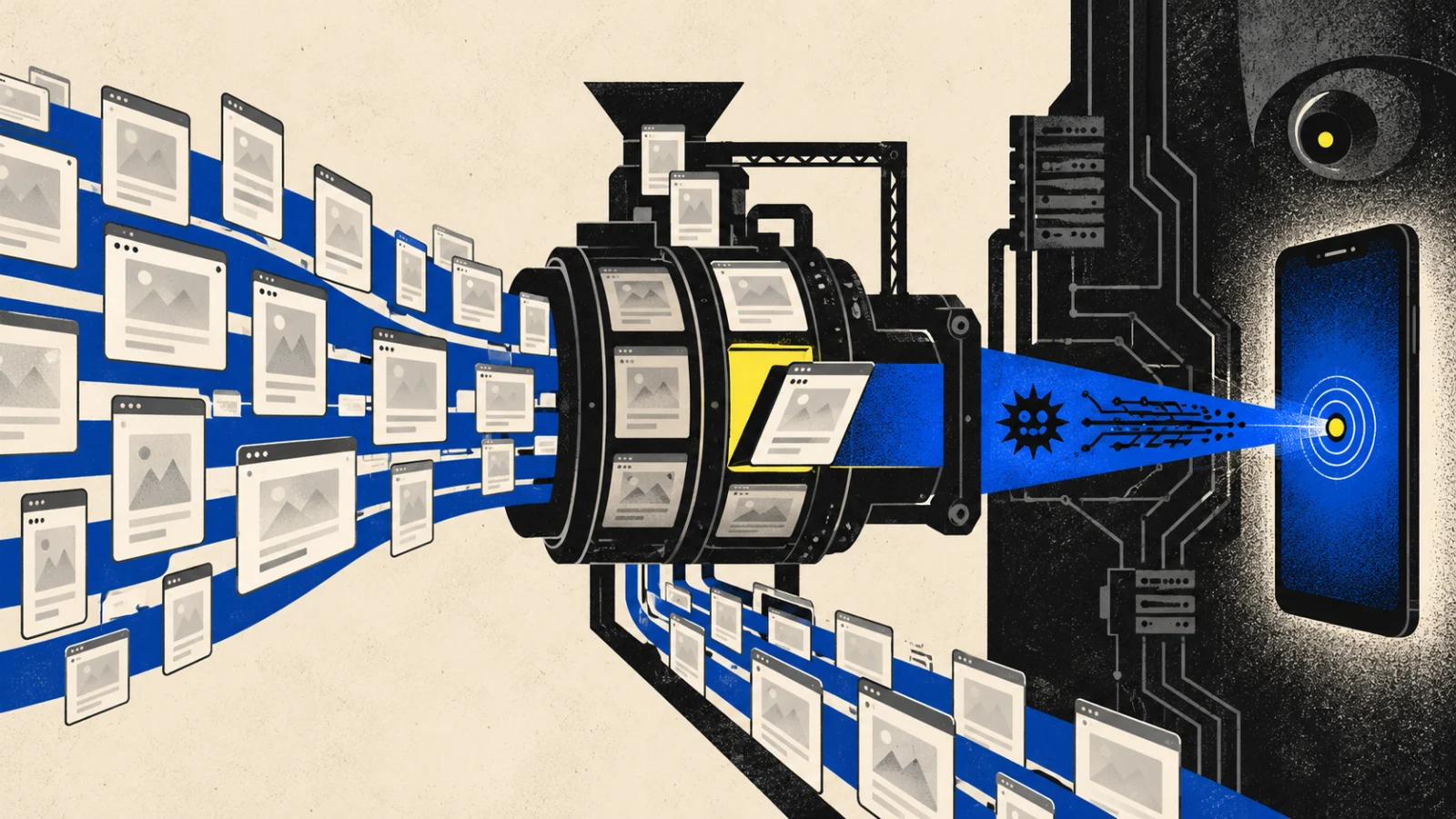
This article was produced by TINA, TechInform's AI editorial system, using linked public sources. The hero is an original AI-generated editorial illustration.