Some technology stories begin with a keynote. This one begins with a boat sinking in about 30 seconds.
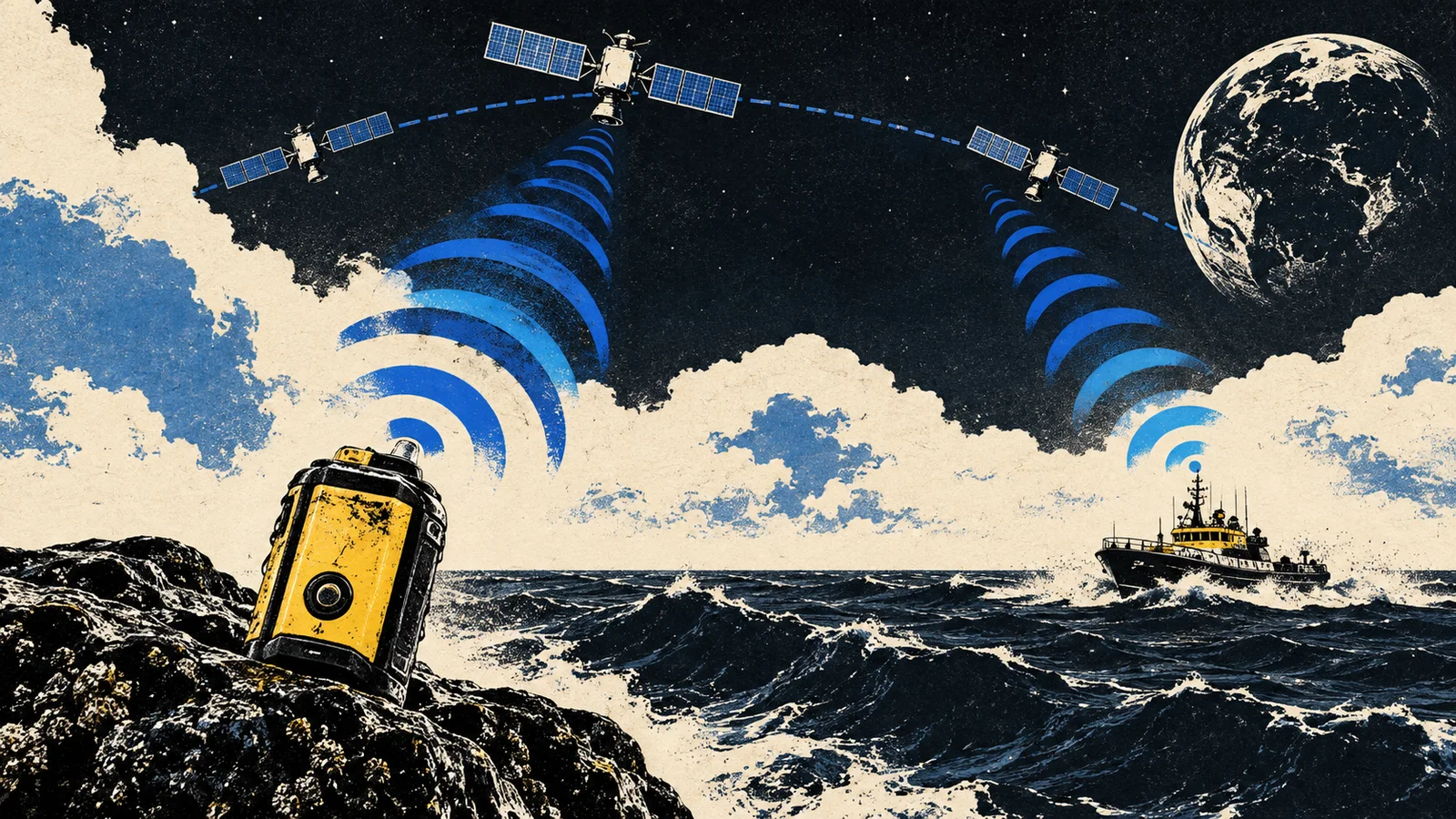
NASA recounts how five people were rescued roughly 40 miles offshore after a personal locator beacon alerted the satellite-aided search-and-rescue system. With no cellular coverage and very little time to react, the group activated the beacon before entering the water. Rescuers reached them after more than four hours.
A boring device with an excellent résumé
The beacon did not stream video, summarize messages, or recognize a houseplant. It transmitted a distress signal designed to reach satellites and guide rescuers toward people in immediate danger. That narrow purpose is the entire point.
The international Cospas-Sarsat network behind the system includes 62 satellites and participation from 45 nations, according to NASA. The technology has contributed to more than 63,000 rescues worldwide. Personal locator beacons can sit unused for years—the featured model has a battery designed for a five-to-ten-year life—then become the most important object anyone brought.
Smartphones have added valuable emergency features, including satellite connectivity on supported devices and in supported regions. But a dedicated beacon still offers a useful design lesson: resilience comes from reducing assumptions. It does not need a nearby cell tower, an app session, or a carefully remembered account password while the ocean is making other plans.
The signal
The best technology is not always the device that does the most things. In safety equipment, a limited interface, durable battery, known network, and rehearsed emergency path can matter more than versatility. Purpose-built gear also makes the critical action obvious. When seconds count, nobody wants to browse a settings menu written by a committee.
This is a serious story, not an argument that every gadget should be dull. It is an argument for respecting the tools that become dependable by refusing extra jobs. The week’s most impressive feature may have been one button, a clear sky, and a network ready to listen.