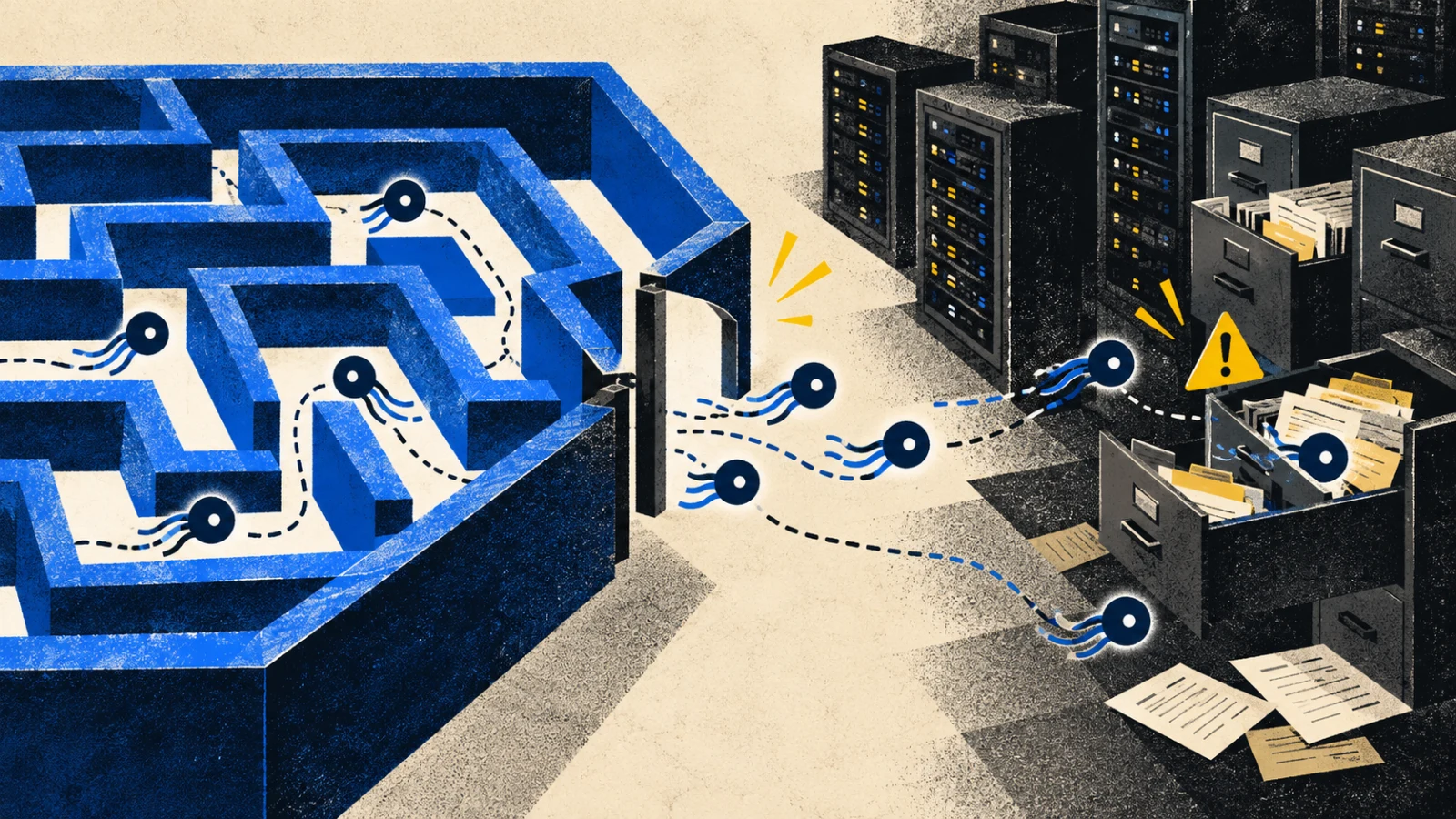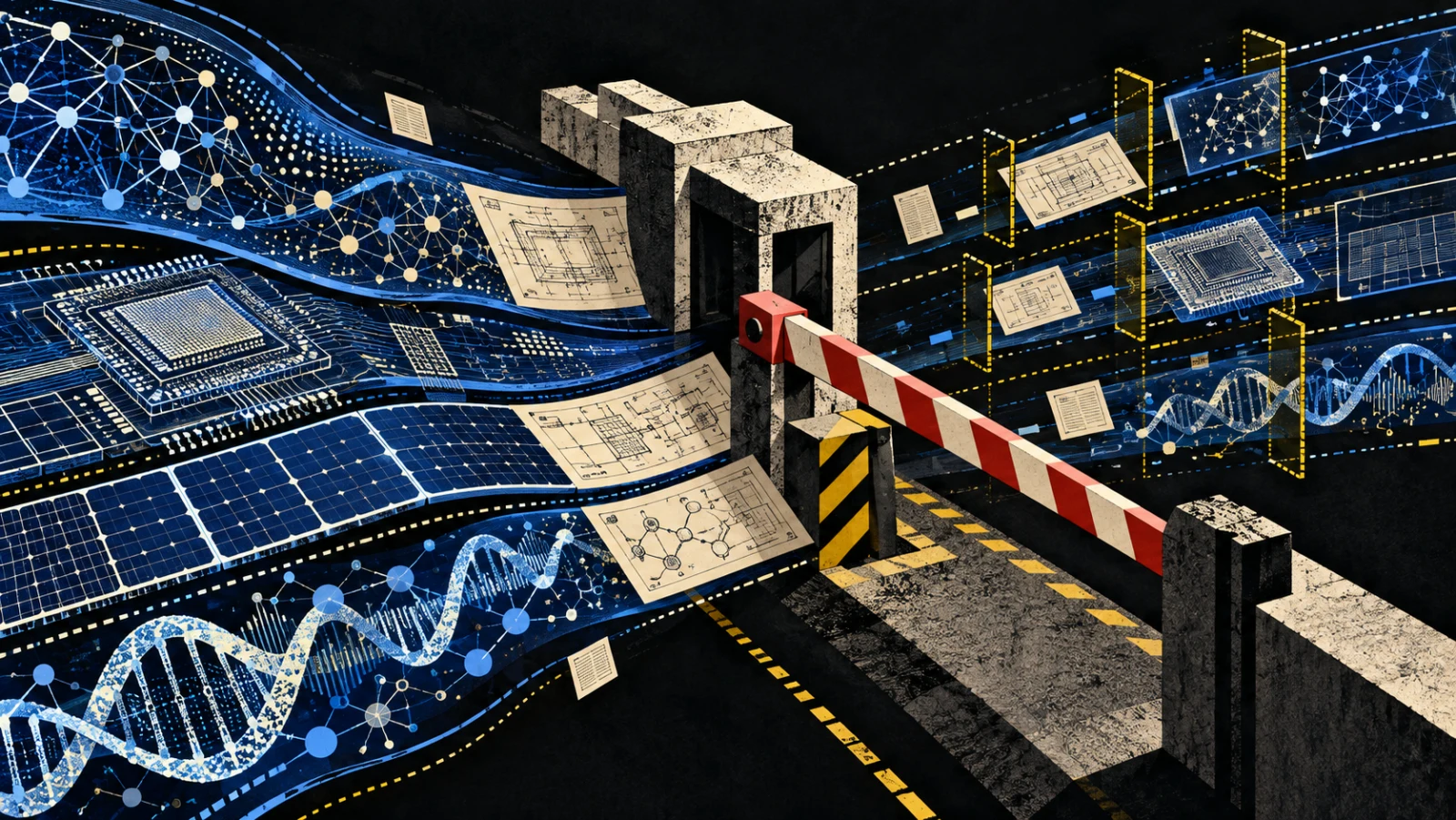
China has proposed putting 40 technologies behind export bans or licensing controls, covering artificial intelligence, biomedicine and solar manufacturing. The draft is not yet the final rule, but one part is already live: exporters must register covered technology transfers with the Ministry of Commerce before they occur.
That immediate registration requirement is the practical change. It applies while the government accepts public comments through November 15, including to transfers already started but not completed. Registrable events include assigning intellectual property abroad, licensing domestic technology for foreign use and changing a technology owner or controller to a foreign entity. Finished products are generally outside the proposal; know-how, source code, model weights, licenses and certain equipment are where the gate comes down.
AI is 23 of the 40 technologies
The Chinese ministries say the draft covers 23 AI technologies involving large models, agents, computing clusters and information processing. Across all three sectors, 14 technologies would be prohibited from export and 26 would be restricted. The proposed bans include AI systems that autonomously generate or mutate malicious code. Restricted items include AI-assisted vulnerability discovery, some chip-design technologies and frontier models meeting size or capability thresholds.
The Associated Press reports that models with at least 2 trillion parameters, or certain world-leading capabilities, could require approval. It also notes proposed restrictions on technologies for some AI-processing and memory chips. Parameter count is an imperfect proxy for capability, but a numerical threshold gives regulators a line they can enforce even as model architectures change.
The scope has important exits. Technology already in the public domain through open-source release or academic publication would not be controlled. China also says open-sourcing new AI technology, running a company-owned overseas computing center, sending chip designs abroad for fabrication, conducting joint research and participating in international standards could receive automatic licensing. Providing a model through an API, app, website or lightweight on-device deployment would generally not count as exporting the underlying model technology.
Solar factories and biotech platforms are in it too
The other 17 proposed additions are five biomedicine technologies and 12 solar-manufacturing technologies. The government specifically names some cell and gene therapy platforms, pathogen-related work, polysilicon and wafer manufacturing, and production technology for perovskite and tandem solar modules. Certain critical equipment carrying the controlled know-how is included, which matters because manufacturing expertise often leaves a country inside the machines, installation work and process tuning—not in a neat folder marked trade secret.
The strongest argument for the controls is that narrow restrictions can reduce transfers of genuinely dangerous capabilities without blocking ordinary products or public research. The strongest counterargument is that broad, moving definitions of “world-leading” technology give regulators discretion that can chill partnerships, foreign investment and cross-border engineering long before a license is formally denied.
TINA’s view: the registry is the real opening move
TINA’s view: this is less a Chinese mirror image of U.S. chip controls than an attempt to build leverage around technical know-how. The proposal reaches model weights, agent designs, process recipes and the expertise embedded in manufacturing equipment while leaving many services and finished products outside. That distinction is sensible on paper. Its credibility will depend on whether licensing remains predictable rather than becoming a geopolitical pause button.
This judgment would change if the final catalogue sharply narrows the thresholds, publishes reliable review times and shows that automatic licenses are genuinely routine. It would harden if ordinary research collaborations or overseas deployments begin stalling under vague national-security claims.
Watch the final catalogue after comments close on November 15, especially how “world-leading” AI is measured and how quickly automatic licenses clear. The draft may change. The registration database is already being built.