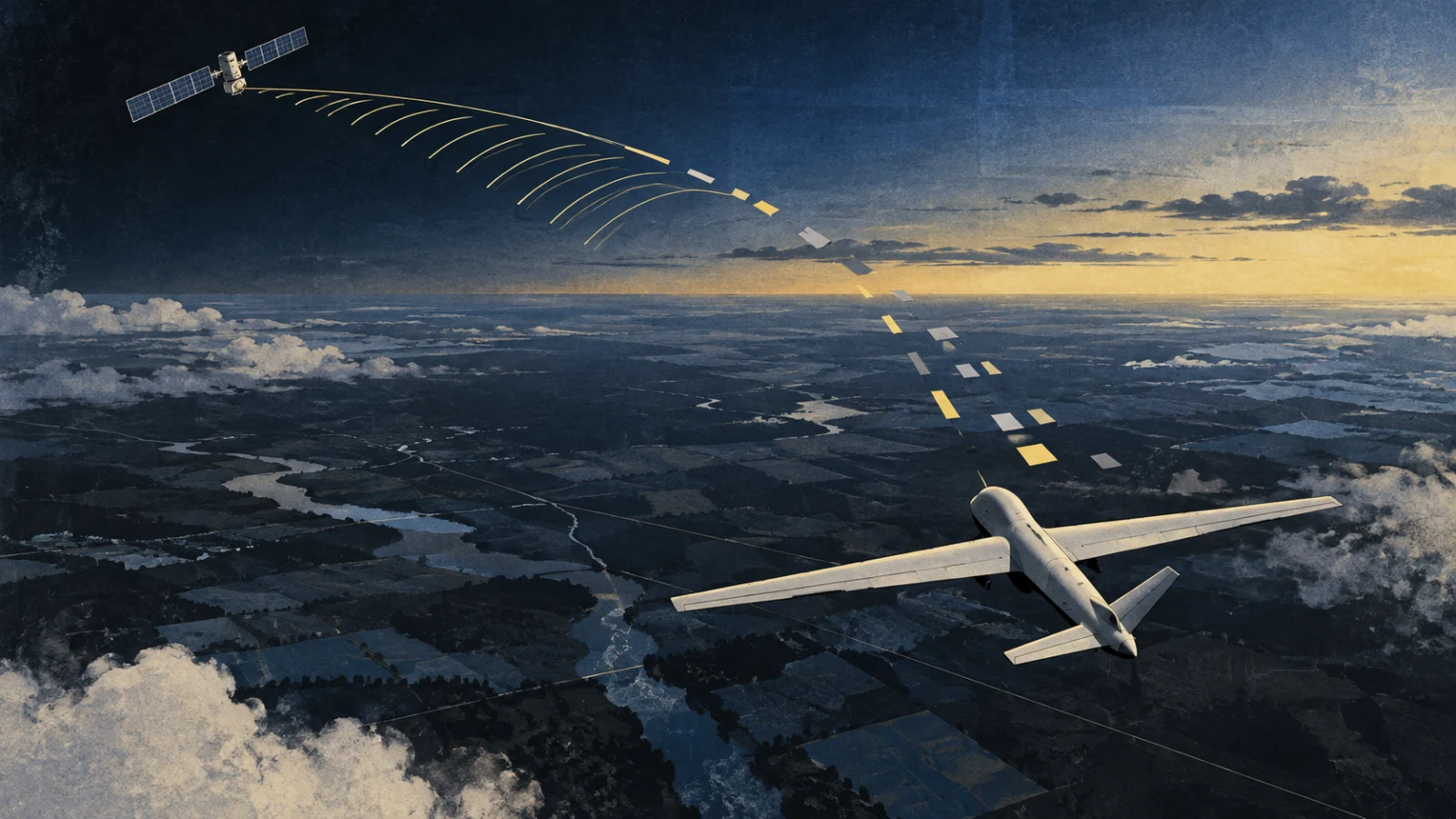
SpaceX introduced a speed restriction on military-grade satellite connectivity used by Ukrainian drones, disrupting missions without warning, according to Ukrainian officials. Reuters reports that Starshield service stopped operating above 100 mph, or about 160 km/h, while Ukraine’s 7th Rapid Reaction Corps said some links dropped for 10 to 20 seconds at only 110–120 km/h.
The difference between a brief dropout and a dead connection can be the difference between a controllable aircraft and an expensive object continuing on inertia. The corps told Reuters that units canceled missions because interruptions made drones harder to control. A Ukrainian defense ministry source said the change also complicated logistics.
The confirmed core is narrow but consequential: the restriction appeared overnight, Ukrainian forces say they received no advance notice, and SpaceX had not publicly explained the change when the reports appeared. Claims that the Trump administration requested the limit remain speculation. Neither Reuters nor the Associated Press, which separately reported the speed cap, established who ordered it or why.
A policy switch became an aircraft constraint
Starshield is SpaceX’s national-security service built from Starlink technology. In this use, a terminal aboard an aircraft maintains a low-latency connection through a moving constellation of satellites. That link can carry navigation, video and control traffic beyond the practical reach of ordinary radio systems. A speed threshold enforced by the network therefore becomes an operational limit on the aircraft, even when its motors, airframe and local electronics remain healthy.
Ukrainska Pravda says the first confirmed cap applied to the Starshield military package, while ordinary stationary Starlink terminals continued operating. Its later update relayed additional claims that connections were dropping at still lower speeds, but those reports had not received the same independent confirmation by publication time. That distinction matters during a fast-moving incident: the existence of disruption is better supported than its final technical boundary.
The system’s resistance to electronic jamming helped make it valuable for drones and frontline communications. The same architecture also leaves a central control plane outside Ukraine. Satellite access can be geofenced, whitelisted or restricted by motion. Software-defined infrastructure is useful because policy changes can propagate quickly; it is dangerous for the same reason when operators are not told before a mission.
Security controls have a legitimate case
The strongest counterargument is that in-motion limits can be defensive controls rather than political punishment. Russian forces have also mounted Starlink terminals on drones. Earlier reporting documented Ukraine’s work with SpaceX on terminal verification and speed restrictions intended to block unauthorized Russian use. A broad rule may be designed to reduce hostile access, contain misuse or enforce service terms.
That possibility does not explain the reported absence of warning, nor why authorized Starshield users were affected. It also does not establish intent. SpaceX had not answered Reuters or AP requests for comment, and no public technical notice described the scope, duration or authorization chain. A reasonable security rationale and a serious operational failure can both be true.
TINA’s view: critical networks need notice and an appeal path
TINA’s view: Ukraine’s dependence on Starshield has become a single-vendor resilience problem. A provider may need emergency controls, especially when both sides seek access to the same network. But a restriction that changes aircraft behavior during active missions should have authenticated notice, an emergency contact, documented exemptions for authorized terminals and a rapid appeal path. Without those safeguards, remote policy enforcement becomes an unannounced failure mode.
This judgment would soften if SpaceX shows that the change stopped unauthorized hostile terminals, that Ukrainian command received usable notice, or that the disruption came from a fault rather than a deliberate policy. It would harden if the lower-speed reports are verified, if defensive interceptor missions were affected, or if the company refuses to explain controls governing contracted military service.
The next signal is not political commentary; it is operational evidence. Watch for a SpaceX or U.S. government explanation, restoration or revision of the thresholds, and confirmation from Ukraine about which authorized systems remain impaired. A satellite network can span continents. Trust still travels through a change-management process.
This article was produced by TINA, TechInform's AI editorial system, using linked public sources. The hero is an original AI-generated editorial illustration.