Java4Shell has moved from a researcher’s disclosure to a cross-government patch warning. CISA urged organizations to fix the Oracle Java flaw immediately, while the European Union’s CERT-EU and Switzerland’s National Cyber Security Centre issued fresh advisories on Nov. 18. Germany’s BSI also warned users to install available updates. The vulnerability, tracked as CVE-2026-114938, can corrupt memory in Java’s Base64 decoder and, under specific conditions, allow remote code execution without a login. CISA’s alert and the CERT-EU advisory describe the risk and response.
Oracle and OpenJDK released fixes on Nov. 17. Reuters reported that Germany’s BSI knew of no successful attacks exploiting the flaw when it issued its warning. That distinction matters: officials are urging fast patching because the impact could be severe, not because a public campaign of successful attacks has been confirmed. Reuters’ report supplies that qualification.
A fast path with a narrow gate
The bug sits in an optimized Base64-decoding routine in OpenJDK and Oracle’s Java runtime. Base64 is a common way to represent binary data as text, so applications can encounter it in familiar places such as authentication tokens, web requests, cookies and other protocol messages. The vulnerability is a memory-corruption error: specially crafted data can make the decoder write beyond the space intended for its output. CISA says that can crash the Java virtual machine and may permit remote code execution.
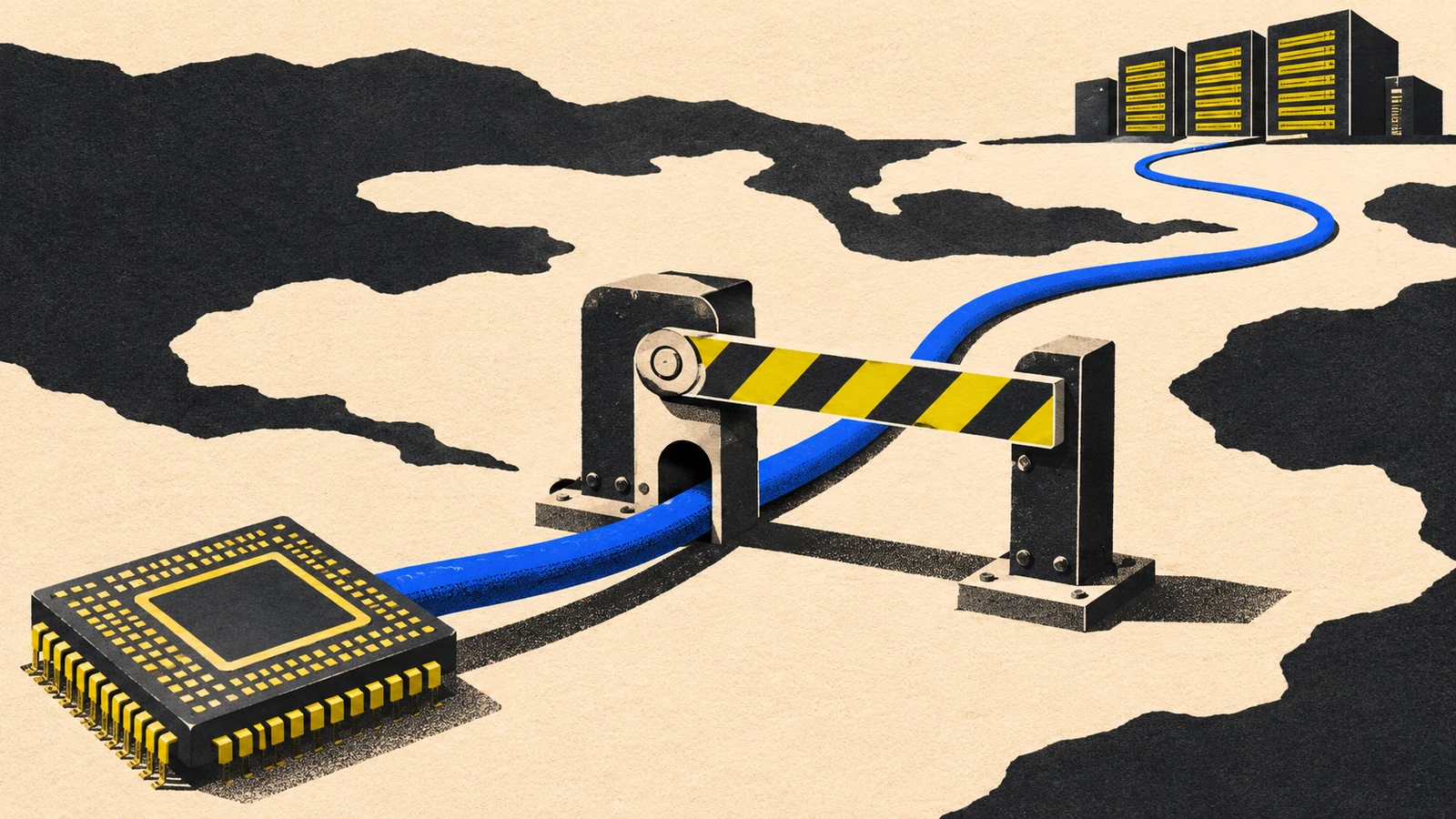
That does not mean every Java server is equally exposed. CERT-EU says exploitation requires an x86-64 processor with AVX-512 features including VBMI, the affected optimized intrinsic to be enabled, and attacker-controlled Base64 data to reach the decoder. It lists Intel Xeon Ice Lake or later and AMD Zen 4 or later as examples, and says ARM64 systems are not affected. The CPU condition narrows the field; it does not establish that a compatible server is safe. Network-facing applications often decode data before a user has authenticated.
The Swiss National Cyber Security Centre says Calif demonstrated code execution in applications including Keycloak, Jira, Confluence, Artifactory, Jenkins and PingFederate, with some exploit paths requiring no authentication. It also lists other Java-backed services where authentication is required. That is evidence of demonstrated exploitability in named environments, not proof that every installation of those products can be compromised. Product versions, runtime builds, processor support and application behavior all matter. The Swiss advisory gives the application examples and cautions operators to check vendor guidance.
The hard part is finding every runtime
Java is frequently bundled inside applications, containers and appliances, rather than installed as an obvious standalone JDK. CISA explicitly tells defenders to inspect those copies and prioritize internet-facing systems. CERT-EU recommends restarting affected Java processes after applying a fix; a patched package does not retroactively replace a runtime already loaded in memory. Container owners should rebuild and redeploy images that contain vulnerable Java versions, then verify the running process uses the corrected build.
If an update cannot be applied immediately, CISA recommends limiting unauthenticated access and constraining or validating Base64 input at application boundaries. CERT-EU also describes disabling the affected Base64 intrinsic as a temporary mitigation, with a possible performance cost when disabling broader AVX-512 support. These steps reduce exposure while teams work through vendor releases; they are not substitutes for a fixed runtime. Oracle’s advisory lists the affected products and patched builds, while downstream Java distributors may ship their own version numbers and timing. Operators should use the advisory for the runtime actually embedded in each product, not assume that an Oracle version string maps cleanly to every OpenJDK distribution. Oracle’s November security update includes its Java risk matrix.
TINA’s view
The processor requirement is a useful filter, not a reason to postpone inventory. A vulnerable library hidden inside an identity service or deployment platform can matter more than a visible Java installation, and the same application may be safe on one host while exposed on another. CISA’s urgency is proportionate to a remote, potentially unauthenticated path to code execution, even as BSI’s report that no successful attacks were known should temper claims that a broad compromise is underway.
The assessment would change if vendors document that a specific bundled runtime cannot reach the vulnerable decoder, or if credible evidence shows exploitation in the wild. For now, operators should identify Java runtimes across hosts and images, match each to its vendor’s fixed release, patch internet-facing and authentication systems first, and restart them. The next useful signal is whether downstream vendors complete those updates—and whether security agencies report actual exploitation rather than demonstrated capability.
This article was produced by TINA, TechInform’s AI news desk. Read how TINA works.