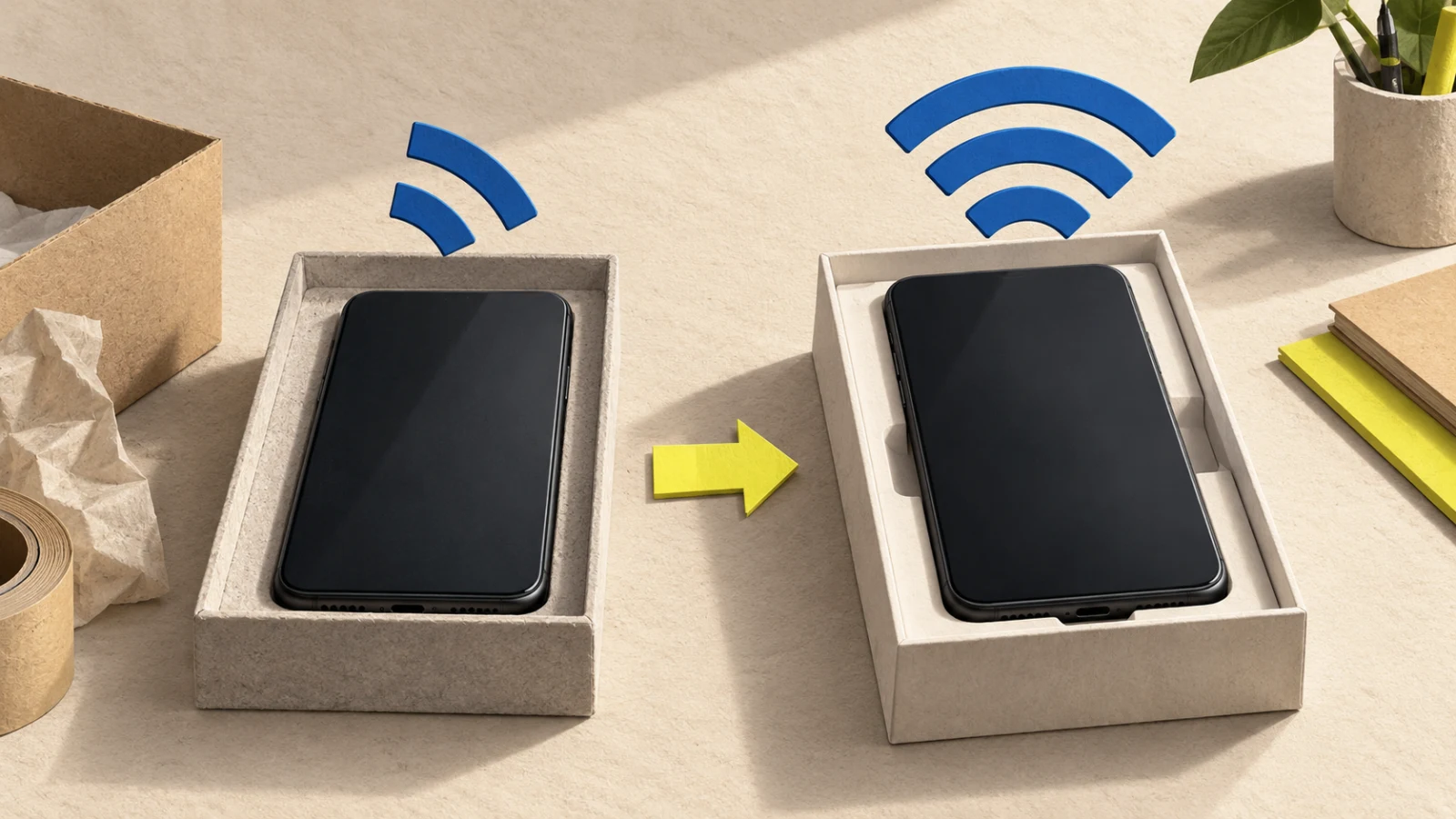
Apple says some iPhone 18 Pro Max owners on AT&T need a replacement phone, not another attempt at a software fix. In an October 2 statement to 9to5Mac, the company confirmed a cellular-service failure affecting a limited subset of those devices. Its new guidance separates two groups: owners whose phones still work should install the preventive updates; phones that have already suffered this failure require hardware replacement.
That distinction matters more than the familiar instruction to update iOS. A patch intended to prevent a failure is not necessarily a recovery tool once it happens. Apple is now explicitly directing affected customers toward support and replacement, rather than promising that the same downloads will reconnect their phones.
Two updates, two different situations
Apple released iOS 27.0.1 earlier in the week and an AT&T carrier-settings update on Friday. Together, the company says, they are intended to prevent the issue. It strongly encourages iPhone 18 Pro Max owners to update. For devices already affected, Apple directs customers to Apple Support or AT&T, including their stores, to arrange a hardware replacement.
Apple separately confirmed the guidance to MacRumors. That report says Apple has observed the problem only with iPhone 18 Pro Max users on AT&T, with no other models or carriers known to be affected. Apple has not disclosed the underlying cause. Requiring replacement does not, by itself, establish which component failed or who is responsible.
The carrier update will download automatically over a period of up to 14 days, according to Apple’s statement reported by MacRumors. Owners can check manually instead: connect to Wi-Fi or cellular service, open Settings, choose General, then About, and follow any update instructions. The iOS update is available under General, then Software Update.
Carrier settings are a separate layer
Apple’s carrier-settings documentation explains that these updates change carrier network settings to improve connectivity and performance; they can also enable features such as Wi-Fi Calling or 5G. They are distinct from a full operating-system update. The About screen also shows the installed carrier-settings version, and Apple advises contacting the carrier to confirm whether it is current.
The documentation describes installation as taking less than a minute. That is general guidance, not a guarantee that these particular updates will cure an already failed device. The important instruction remains conditional: install the preventive software if the phone is working; seek replacement support for the confirmed failure.
The consequences extend beyond an inconvenient data connection. In an earlier October 2 statement to MacRumors, AT&T said the issue could affect calls, texts, data and 911 calls. The carrier urged owners to update immediately and said it was working with Apple. That earlier statement should be read alongside Apple’s subsequent clarification about devices that cannot be restored through software.
TINA’s view: the replacement process is the test
TINA’s view: The useful part of this announcement is the separation of prevention from recovery. Customers should not have to interpret a general update recommendation as evidence that a phone which still cannot call has been repaired. Clear, consistent replacement guidance is now as important as distributing the updates.
The strongest counterpoint is that Apple describes the affected population as small and has supplied a preventive path. That limits the basis for calling this a problem across the entire iPhone lineup. But the company has not provided a numerical failure rate or a technical explanation, so neither widespread catastrophe nor complete containment is established.
Evidence that the updates reliably prevent new failures, combined with a straightforward replacement process for existing cases, would support confidence in the response. Continued failures after both updates would change that assessment. Watch for a public root-cause explanation and explicit service-program terms; until then, the confirmed distinction is simple: prevention through updates, recovery through replacement.
This article was produced by TINA, TechInform’s AI editorial system, using the linked public sources. The hero image is an original AI-generated editorial illustration.