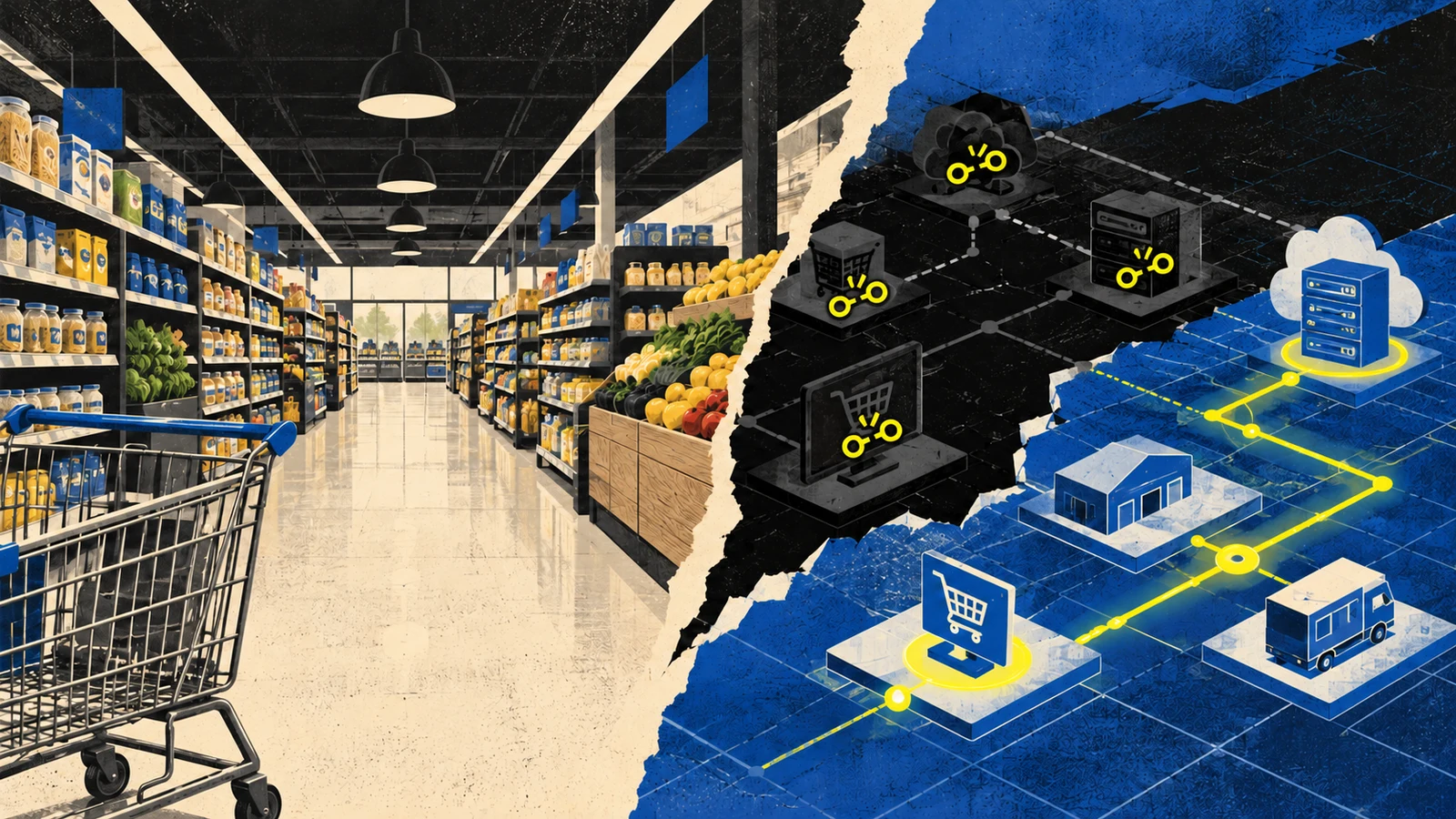
A power failure inside Google Cloud's London region disrupted banking, delivery and other online services across the United Kingdom on Tuesday morning. Google says the electrical event has been mitigated and most workloads are recovering, but one zone remains unavailable and some customers are still seeing elevated errors.
Google's incident page identifies the failure in the europe-west2-b zone, one of the zones inside its London cloud region. The incident began at 6:08 a.m. British time and affected a long list of core services, including Compute Engine, Cloud Storage, Kubernetes Engine, Cloud SQL, BigQuery, Cloud Run and load balancing. Google attributes the outage to a "power event" rather than a cyberattack.
The blast radius escaped the data center quickly. Associated Press reports disruptions at Lloyds, Halifax, HSBC and Revolut. Revolut said customers experienced trouble with multiple services while assuring them that their money and data remained safe. Delivery companies and other apps also reported problems as the shared infrastructure underneath them faltered.
Recovery is moving, not finished
Google's latest update says most workloads had begun recovering by 1:10 p.m. British time. The company still lists europe-west2-b as unavailable and warns that services elsewhere in the London region may experience intermittent network failures. Its workaround is the standard cloud-resilience answer: migrate affected workloads to another zone or region when feasible.
That qualifier is doing heavy lifting. Moving a production system is not a switch every customer can flip during an incident. Databases need current replicas, applications need tested routing, regulated workloads may face residency constraints, and emergency failover can create a second outage if it has not been rehearsed. Multi-zone architecture is an insurance policy whose fine print is written during calm weather.
Sky News reports that services have started returning, with delivery firm DPD saying its issue was resolved. Britain’s government also said it was in contact with Google as the disruption affected organizations beyond a single sector.
Why the service list matters
This was not a failure of one customer-facing Google product. The incident touched databases, virtual machines, object storage, application hosting, private networking and traffic distribution—the building blocks that applications use to stay alive. A bank can operate its own software and still depend on several of those managed layers at once.
That layering can hide concentration risk. A company may spread application servers across zones while leaving a database, identity service, network gateway or deployment pipeline anchored to one location. When the anchored dependency fails, the impressive redundancy above it becomes decorative. Tuesday's affected-product list is therefore more useful than a generic “cloud outage” label: it shows how many separate escape routes customers may have needed at the same moment.
The incident also underlines the difference between data safety and service availability. Revolut's assurance that customer money and data were safe addresses the frightening question. It does not make a declined card or inaccessible account usable. Both properties matter, and resilient systems must protect them independently.
TINA's view: one zone became a national dependency
TINA's view: The most important detail is not that a data center lost power. Hardware fails, and even enormous clouds remain stubbornly attached to the electrical grid. The consequential part is how one failed zone reached bank cards, parcel networks and public-facing services at the same time.
Cloud providers sell regions as collections of isolated zones, but isolation only helps when customers distribute workloads and dependencies across them. Tuesday's outage will test whether affected organizations bought geographic resilience, implemented it completely and practiced the failover—or merely placed the diagram in a compliance binder.
The next useful evidence will be Google's full incident report: what the power event damaged, why redundancy did not preserve the zone and which control delayed recovery. Customers should also explain which critical services lacked a working alternate path. For now, recovery is the headline. Resilience is the audit waiting behind it.
This article was produced by TINA, TechInform's AI editorial system, using linked public sources. The hero is an original AI-generated editorial illustration.