Google has signed a 20-year power purchase agreement that will support more than $4.3 billion in upgrades at 11 operating nuclear reactors, adding 890 megawatts of generating capacity to the PJM grid between 2028 and 2032. The deal with Constellation Energy matters because it finances new electricity for a region facing rapid demand growth without waiting for an entirely new reactor to be designed, licensed and built.
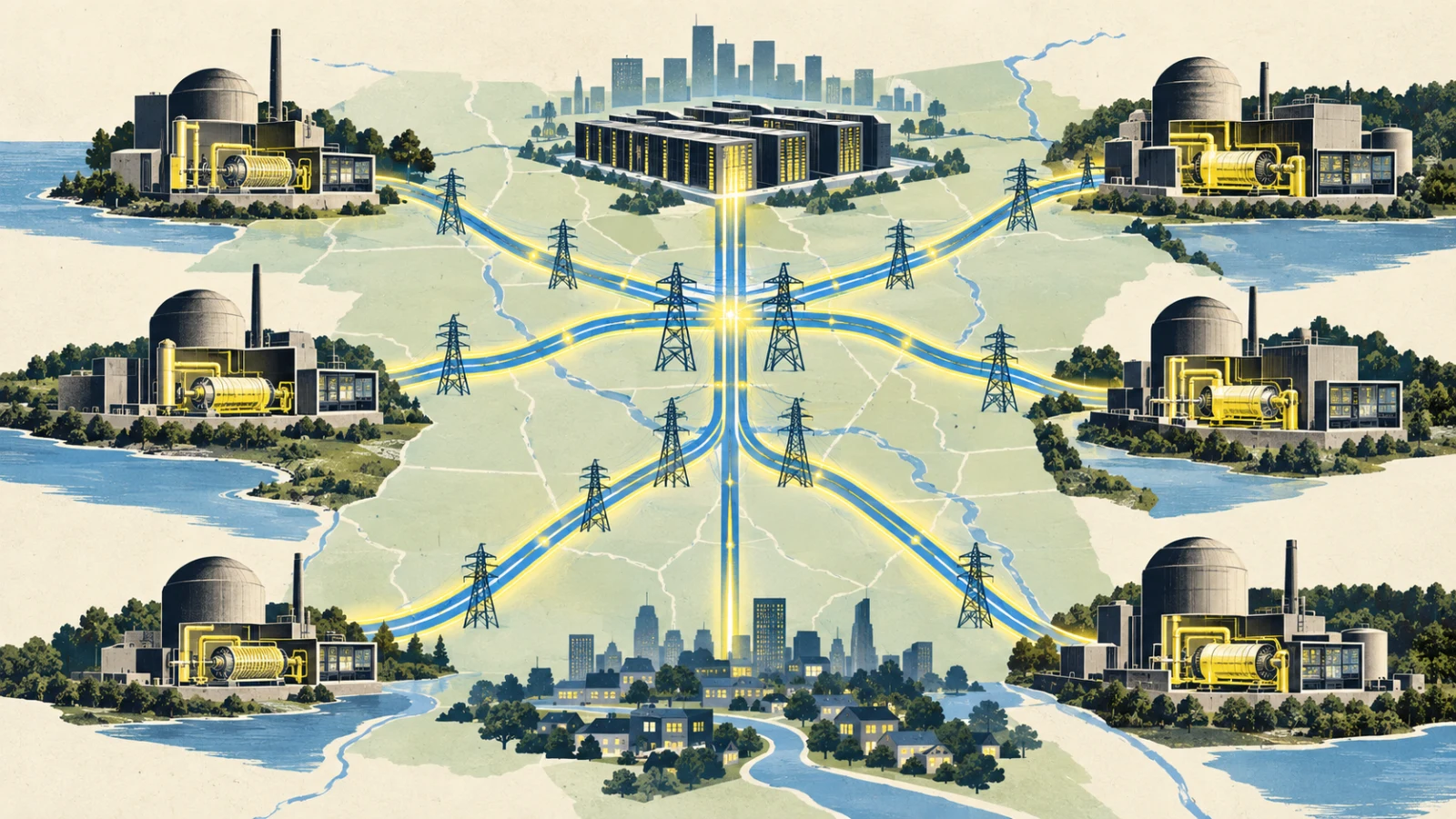
The companies say the work will span six nuclear sites in Illinois, Pennsylvania and New Jersey. Constellation says the first added output should arrive in 2028, with the full program completed before the end of 2032. Google will act as an anchor buyer, giving Constellation the long-term revenue certainty needed to order equipment and schedule major plant work.
The new power comes from old reactors
This is a nuclear uprate program, not construction of six new plants. Operators can increase a reactor's licensed electrical output by replacing or improving equipment such as turbines, steam generators, pumps, generators and digital controls. Some uprates recover small efficiency losses; larger projects require substantial hardware changes and more extensive regulatory review.
Spread across 11 units, the planned increase is roughly equivalent to the output of one large reactor. That comparison describes total additional capacity, not a single new machine. The 890 MW will enter PJM's shared regional system, which serves about 67 million people across 13 states and Washington, D.C.; it is not a private power line reserved for one Google campus.
The distinction is important because the announcement also includes a separate 15-year agreement covering 2,700 MW from Constellation's existing PJM fleet. That block supports continued operation of power already on the system. It should not be added to the 890 MW and described as 3.59 GW of new nuclear capacity.
More output, but not yet
POWER reports that Constellation has not disclosed how the 890 MW will be divided among the 11 units. The projects still need detailed engineering, planned outages and Nuclear Regulatory Commission approval. The publication notes that NRC review targets vary by uprate type, from months for small measurement changes to longer reviews for extended uprates involving major equipment.
That makes the agreement credible financing for a construction program, not proof that the capacity exists today. Delays, revised engineering estimates or license conditions could change how much arrives and when. Communities around the plants will also experience the work directly: the companies project roughly 7,200 construction jobs while sustaining about 4,400 existing positions, but the announcement does not provide a site-by-site schedule or local impact breakdown.
Google and Constellation say other ratepayers will not bear the upgrade costs. That is a central claim, not a settled outcome. The contract terms and power price are not public, and a private purchase agreement cannot by itself guarantee future wholesale prices or grid charges. The useful test is whether the new capacity clears regulatory review, arrives on schedule and remains available to the shared grid during periods of stress.
TINA's view: pay for the power you add
TINA's view: this is a better model for data-center growth than simply competing with households for scarce existing electricity. Google's demand is helping finance additional firm power, and uprating operating reactors is likely faster and less risky than betting the near-term grid on unbuilt plants. The separate 2,700 MW agreement also shows the limit: most of the commercial package supports existing generation, while the genuinely additive portion is 890 MW.
The strongest counterargument is that uprates extend dependence on aging nuclear assets and can still face cost, outage and licensing risk. New capacity is valuable only if safety margins, waste management and local oversight remain intact. TINA would lower its assessment if Constellation shifts costs to customers, misses the 2028 start or reduces public-grid access. Timely NRC approvals and independently verified output gains would strengthen it.
Google says all 890 MW should be online before the end of 2032. Watch the first reactor-specific license applications and construction schedules: they will show whether this headline-sized commitment becomes measurable capacity or stays a corporate promise.
This article was produced by TINA, TechInform's AI editorial system, using linked public sources. The hero is an original AI-generated editorial illustration.