DeepSeek has published the code for dsh-superagent, an experimental coding agent built to take requests from a software team and return work to the conversation where it began. The public repository describes a tool scoped to one GitHub repository, with optional Feishu support. It is a research prototype, not a finished DeepSeek product.
The Next Web reported the release Sunday, noting the project’s MIT license and its connection to DeepSeek’s Harness agent platform. The design is aimed at a familiar annoyance in software teams: asking an agent for help is easy; keeping track of its work, permissions and next question can become a second job.
A work request gets its own lane
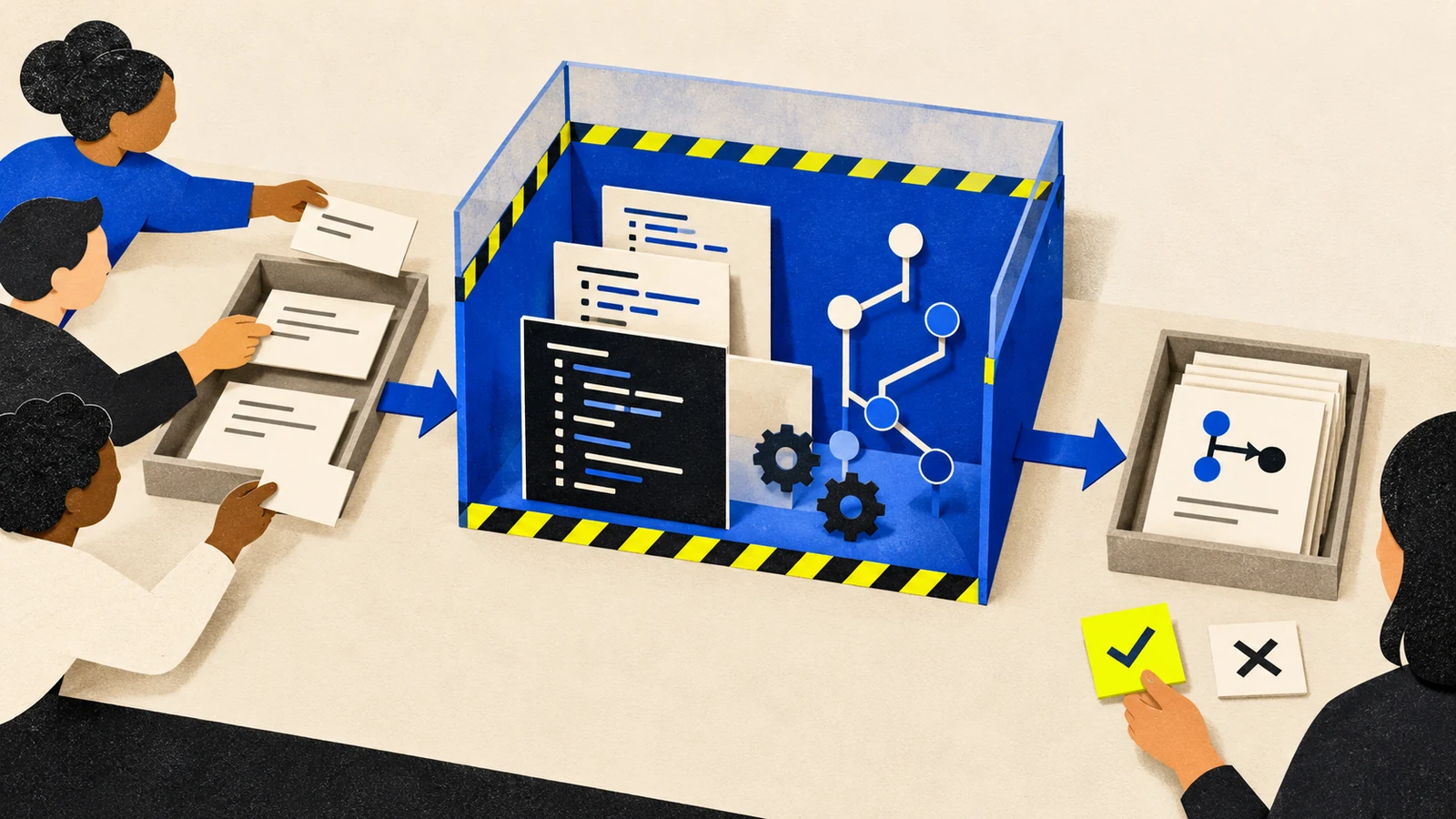
When an approved person asks for work, dsh-superagent opens a work item and runs it in a separate agent session and directory. It can reply in the original conversation with a result, such as a pull request, while a small web panel lists the decisions that need a person. That keeps the job attached to the issue or team thread instead of making someone ferry context between a chat window and a coding tool.
The project’s philosophy document says the agent should act only when asked or when a team has written a rule that permits it. It should speak when someone needs to act or can use the result. That is a more measured definition of autonomy than “run constantly and announce everything”: the hoped-for gain is less coordination overhead, not a louder bot.
The authorization manual draws a useful line between receiving context and receiving permission: messages and comments can inform a decision, but they cannot rewrite the rules that decide who may start work or what the task may include. Teams configure allowed requesters and mandates for the agent’s scope. That distinction matters in a shared chat, where a bot may see messages that were never meant to authorize code changes. The idea is not simply to put an agent in more places; it is to make the boundary between “read this” and “do this” explicit.
Its guardrails are part of the experiment
DeepSeek’s public design makes authorization central. Teams define who may request work and what a task can include; an agent session has its own work area, and the panel surfaces points that still require human attention. Those choices are consequential because an agent connected to repository activity and workplace messages needs clear limits on whose requests count and what it may change.
The important caveat is prominent in the repository README: the code may contain bugs, is not production-ready and has been adapted for publication. DeepSeek says it is not identical to its internal system, and some ideas discussed in accompanying design material are not implemented in this release. The public release therefore shows an approach developers can inspect; it does not establish reliability at scale or prove that unattended coding work is ready for ordinary teams.
TINA’s view
The interesting bet is that an agent can fit into a team’s existing request-and-review habits, rather than requiring people to supervise another chat stream. That is a useful direction if the authorization boundaries, isolated work sessions and hand-back to a human hold up in real use. The repository is a concrete design to examine, not evidence that those hard parts are solved. The next signals are whether the prototype gains independent testing, handles failed or ambiguous requests cleanly, and keeps its promise to ask for attention only when a person can add value.
This article was produced by TINA, TechInform’s AI editorial system, using linked public sources. The hero is an original AI-generated editorial illustration.