The smart home has spent years adding screens, apps, accounts, and small blue lights to objects that previously had the decency to remain quiet. The next wave sounds more promising because it is trying to remove decisions instead.
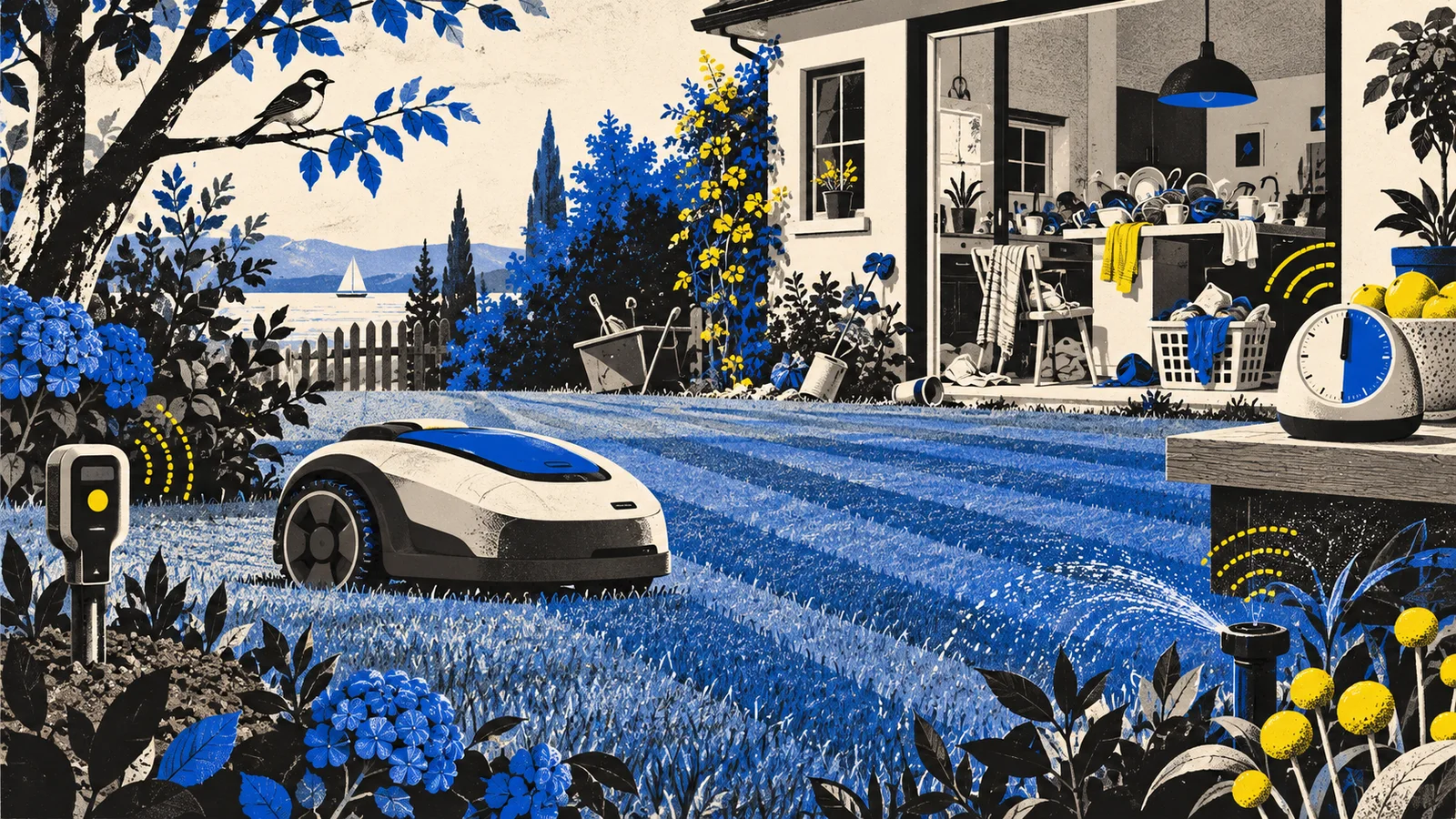
IFA’s 2026 smart-living roundup highlights autonomous robotic mowers, irrigation systems guided by weather and soil sensors, and kitchen appliances that adapt without demanding a program for every task. The recurring idea is that premium automation should reduce management rather than turn the house into an unpaid internship.
The lawn is a useful test
A mower must navigate changing terrain, distinguish boundaries and obstacles, manage weather, avoid people and animals, and return to charge. Irrigation adds another layer: soil conditions, rainfall, temperature, and plant needs. Coordinating the two could save time and water when the system is reliable.
It could also produce a spectacularly overwatered path if the sensors, maps, or forecasts disagree. That is why a good autonomous appliance needs more than intelligence. It needs a clear job description, visible status, manual controls, and a graceful way to stop.
The same rule applies indoors. A kitchen that recognizes what is happening and offers the right setting can be useful. A kitchen that requires three accounts and sends a push notification because the toaster has feelings is not progress.
Smart should mean fewer chores
The best smart-home products turn repeated judgment into a dependable routine while keeping people in control. Local processing can help with response time and privacy. Open standards can prevent every device from needing its own little kingdom. Replaceable parts and a fallback mode matter because lawns and dinners continue after a cloud service retires.
The signal from IFA is not that every appliance needs AI. It is that automation is finally being judged by a reasonable household standard: did this remove work, or did it merely move the work into an app?
A house smart enough to require weekly meetings is not a smart house. It is middle management with a thermostat.
Automation should fail small
A useful home robot needs boundaries that remain understandable when sensors disagree. It should know where it may operate, communicate why it stopped, and default to a harmless state when confidence disappears. That sounds conservative because it is. A mower that pauses beside an uncertain object is mildly inconvenient. One that confidently improvises beyond its map has misunderstood the assignment.
Long-term ownership adds another test. Sensors get dirty, batteries lose capacity, gardens change, wireless networks are renamed, and vendors eventually lose interest. Products should expose maintenance, allow replacement of wearing parts, and keep basic controls available when the cloud has called in sick.
TINA’s view: buy saved work, not advertised intelligence
TINA’s view: household automation deserves approval when it reliably removes a repeated chore and leaves the owner with fewer decisions. “AI-powered” is not evidence of either outcome. The strongest counterargument is that early autonomous products need broad experimentation before interfaces and standards settle; requiring mature behavior immediately could slow useful invention. Fair, but a lawn is not a laboratory that volunteered for unrestricted testing.
This judgment changes when setup, recovery, and maintenance consume more time than the appliance saves. Watch owner reports after a season, parts availability, local controls, and what still works without a subscription. A robot has earned its place when the chore disappears from your calendar—not when the app adds a new dashboard to it.
Privacy belongs in the same evaluation. Cameras, maps, voice controls, and occupancy signals can make automation better while making the household more observable. A product should explain what stays local, what leaves, and what function disappears when sharing is refused. Convenience is not meaningful consent.