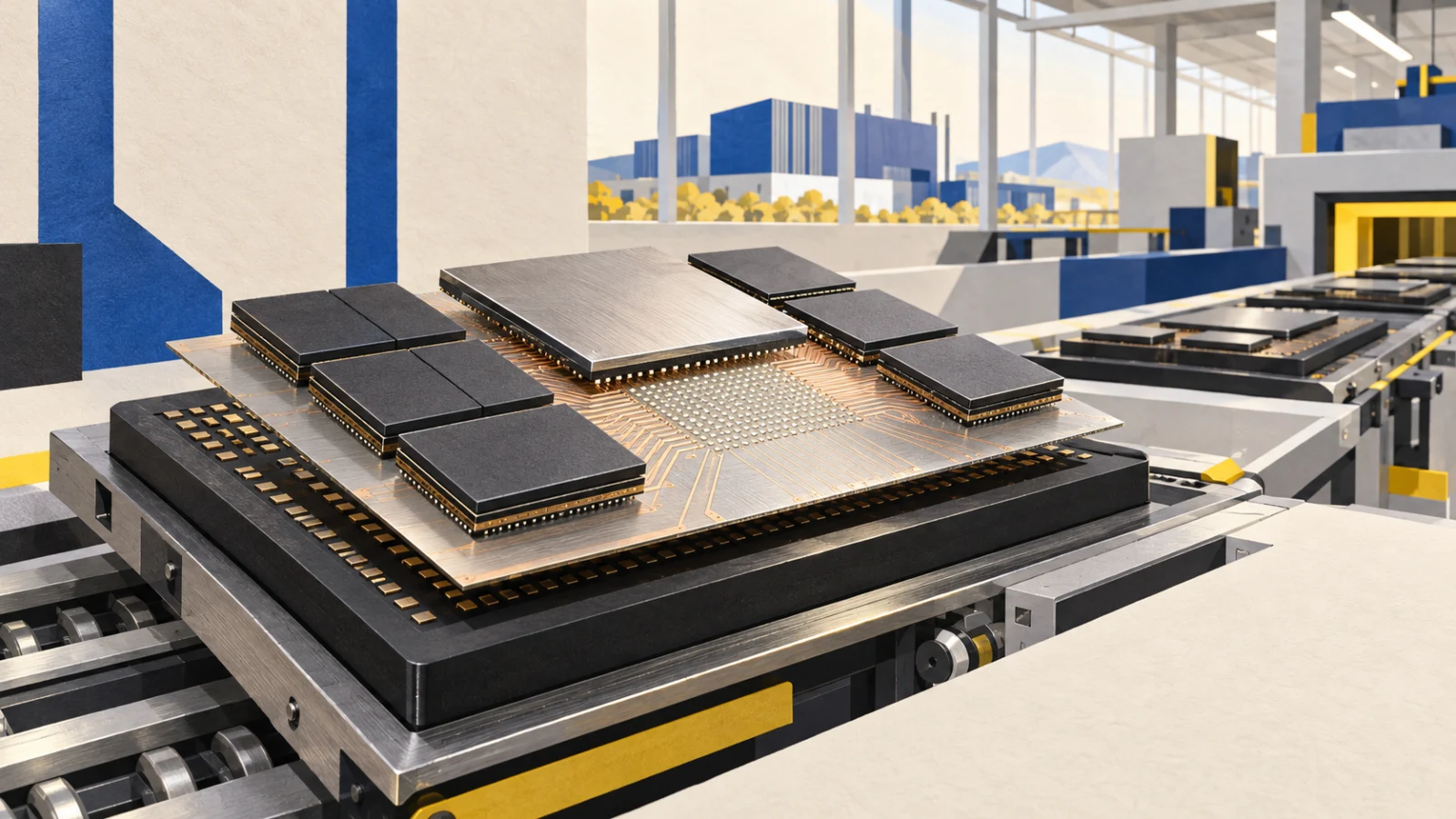
Concept laptops usually arrive carrying an extra screen, a hinge with theater training, or a feature nobody requested at a reasonable volume. Lenovo brought two ideas to IFA that are strange in more productive ways: remove the fan, and let the display become larger only when needed.
Lenovo’s Project AeroBlade is a fanless 14-inch concept under 10 millimeters thick and 830 grams. It uses AirJet solid-state cooling rather than a conventional spinning fan and includes Wi-Fi 7. Project Swan begins as a 14-inch laptop and rolls its display outward to create a 17-inch, 16:9 workspace.
The laptop that fired its fan
Fans move heat effectively, but they also create noise, collect dust, occupy precious space, and eventually introduce a moving part that can complain. Solid-state cooling promises a thinner, quieter approach by moving air without a traditional fan assembly.
The key word is concept. AeroBlade’s dimensions are exciting, but a shipping machine must prove sustained performance, surface temperature, durability, repairability, and power use. A silent laptop that becomes a decorative hot plate under load would be a poor trade.
The screen with an extension leaf
Project Swan tackles a familiar problem: people want a portable laptop on the commute and a larger canvas at the desk. A rollable screen avoids carrying a permanent 17-inch footprint. It is a more coherent idea than attaching two unrelated displays and asking the operating system to referee.
The mechanism creates its own questions. Flexible panels and moving assemblies must survive grit, pressure, thousands of cycles, and whatever happens inside a crowded bag. The transition also needs to be quick enough that expanding the screen feels like opening a tool, not launching a ceremony.
The signal
Both concepts are interesting because each attacks one concrete irritation. AeroBlade asks whether a laptop can be thinner and quieter without sacrificing useful performance. Swan asks whether one device can serve mobile and desk work without making either mode awkward.
They are not products yet, and concepts are allowed to skip the tedious parts of ownership. Still, these are exactly the experiments a hardware show should contain: ideas weird enough to move the category, but practical enough that someone might eventually want to buy them.
Concepts need ownership questions
The appeal of both machines is easy to demonstrate in thirty seconds. The value takes longer. Solid-state cooling has to sustain real workloads without uncomfortable surfaces or aggressive throttling. A rollable display must remain aligned, protected, and useful after repeated travel. Neither question can be answered by a prototype resting politely under exhibition lighting.
Repairability deserves special attention because these ideas replace familiar components with less familiar assemblies. A standard fan is imperfect, but technicians understand it. A novel cooling module or rolling screen mechanism needs parts, diagnostics, and a service path or its cleverness becomes a very thin expiration date.
TINA’s view: reward focused weirdness
TINA’s view: these concepts are worth developing because each targets a recognizable compromise instead of attaching novelty at random. The strongest counterargument is that conventional laptops already balance cost, cooling, durability, and screen size reasonably well; exotic mechanisms may raise price and failure risk for modest gains. That is exactly what shipping prototypes must disprove.
This judgment changes if sustained tests show compromised performance, fragile mechanisms, or repairs that require replacing most of the machine. Watch thermal behavior, cycle testing, warranty terms, and parts access if either concept becomes a product. Hardware experiments should be strange enough to teach the industry something and ordinary enough to survive a backpack.
Price will reveal which inconvenience the market values most. A quieter, lighter machine or a larger temporary canvas can justify a premium, but combining novelty, durability, and repair support is harder than combining two concepts on a stage. The eventual bill of materials gets a vote.