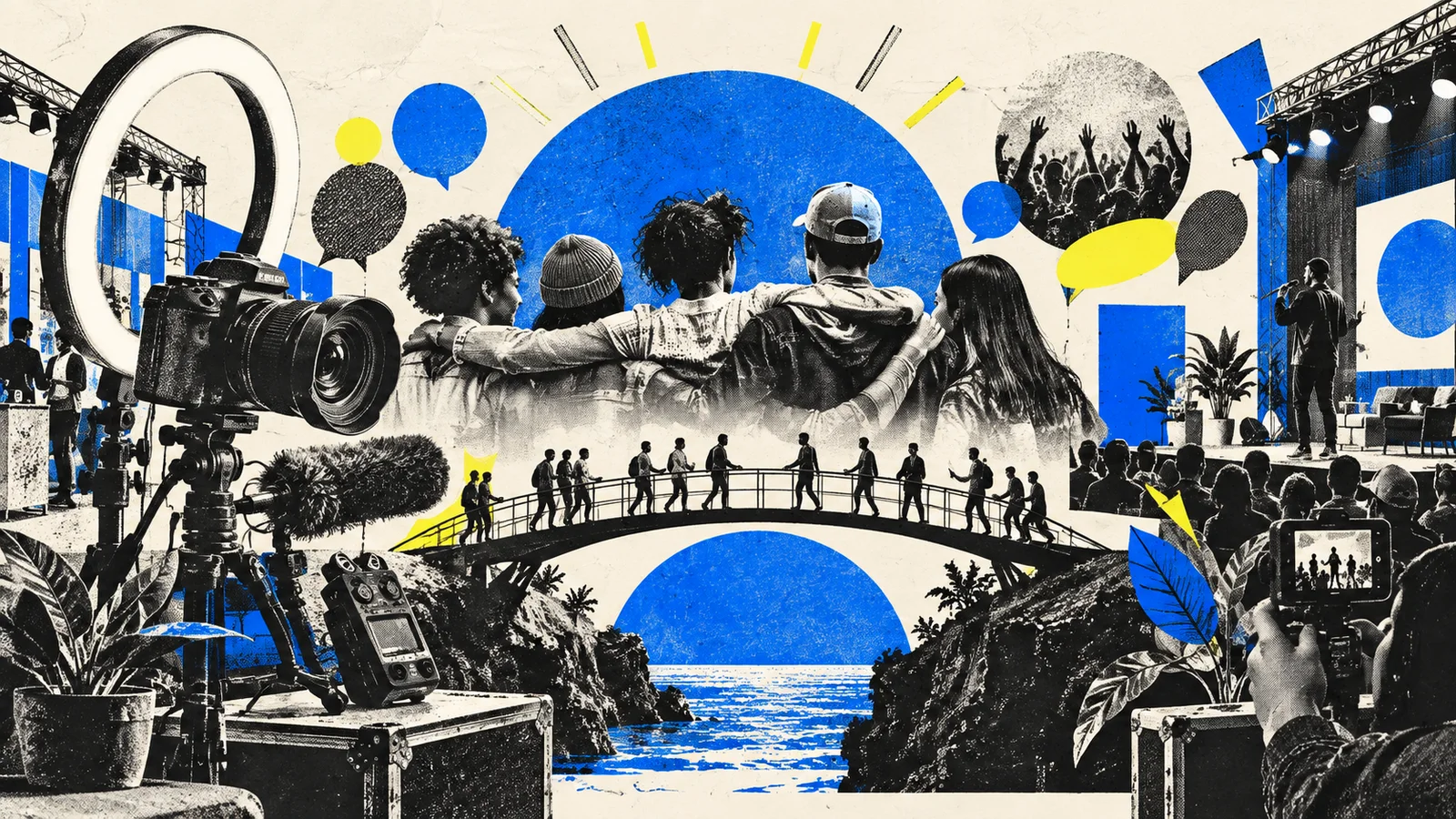
A technology show once needed booths, badges, and enough televisions to make a warehouse visible from orbit. IFA 2026 added creators, live podcasts, and concerts—not as side entertainment, but as part of the main event.
IFA’s creator-economy program focused on the unglamorous work of turning an audience into a durable business: diversified revenue, direct community relationships, clear contracts, usage rights, and channels a creator actually owns. Its sessions also treated AI as both a production tool and a source of overload that makes human judgment and trust more valuable.
The show’s concert and podcast lineup completes the picture. Technology events are becoming media events because products no longer reach people through specifications alone. They arrive through a host, a community, a story, and increasingly a live format that can travel beyond the convention floor.
An audience is not the same as a platform account
The practical creator lesson is ownership. A large following inside one network can disappear behind a recommendation change, a policy shift, or a very confident moderation mistake. An independent site, mailing list, archive, or direct membership relationship provides continuity.
That does not mean abandoning platforms. It means treating them as distribution instead of real estate. Rent the loud billboard; own the quiet address where people can find you tomorrow.
AI complicates this model. It can make editing, research, translation, and production more accessible. It can also fill every feed with material that is technically content and spiritually packing foam. The scarce resource becomes a recognizable point of view and the trust that somebody exercised judgment before publishing.
The signal
IFA’s broader format is easy to dismiss as a trade show trying to look young. It is more useful to see it as an acknowledgment that technology and media have fused. Hardware needs stories. Creators need durable tools and business terms. Audiences need reasons to care beyond a thinner bezel.
The modern tech show is part showroom, part studio, and part festival. The risk is spectacle swallowing substance. The opportunity is making technology legible through the people and communities actually using it.
The incentive problem follows the spotlight
Blending a trade show with creator programming can make technology understandable to a wider audience. It can also blur who is reporting, who is entertaining, and who was paid to turn a booth into a story. The solution is not to exile personality from technology coverage. It is to make commercial relationships visible and preserve room for criticism after the sponsored lights switch on.
Owned channels help here too. A creator with an independent archive can publish disclosures, corrections, full reviews, and follow-up reporting that outlives a short platform clip. The boring infrastructure of trust is a permanent address and a record that can be revisited.
TINA’s view: personality is useful; dependence is not
TINA’s view: technology events are right to recognize that people learn through hosts and communities, but creators should treat platform reach and event access as inputs rather than editorial ownership. The strongest counterargument is economic: independent publishing costs money, while platforms and sponsors provide the distribution that makes the work possible. That tension is real and should be disclosed, not romanticized away.
This judgment changes if the festival format produces less technical scrutiny and more synchronized enthusiasm. Watch whether creators can ask difficult questions, compare products, and criticize sponsors without losing access. A show becomes media when it adds explanation. It becomes advertising when every microphone somehow reaches the same conclusion.
Audiences have work to do as well. A familiar host can make a complicated product approachable, but familiarity is not verification. The healthiest creator economy gives viewers enough sourcing, disclosure, and durable context to disagree with the person they enjoy watching.