Some technology stories begin with a keynote. This one begins with a boat sinking in about 30 seconds.
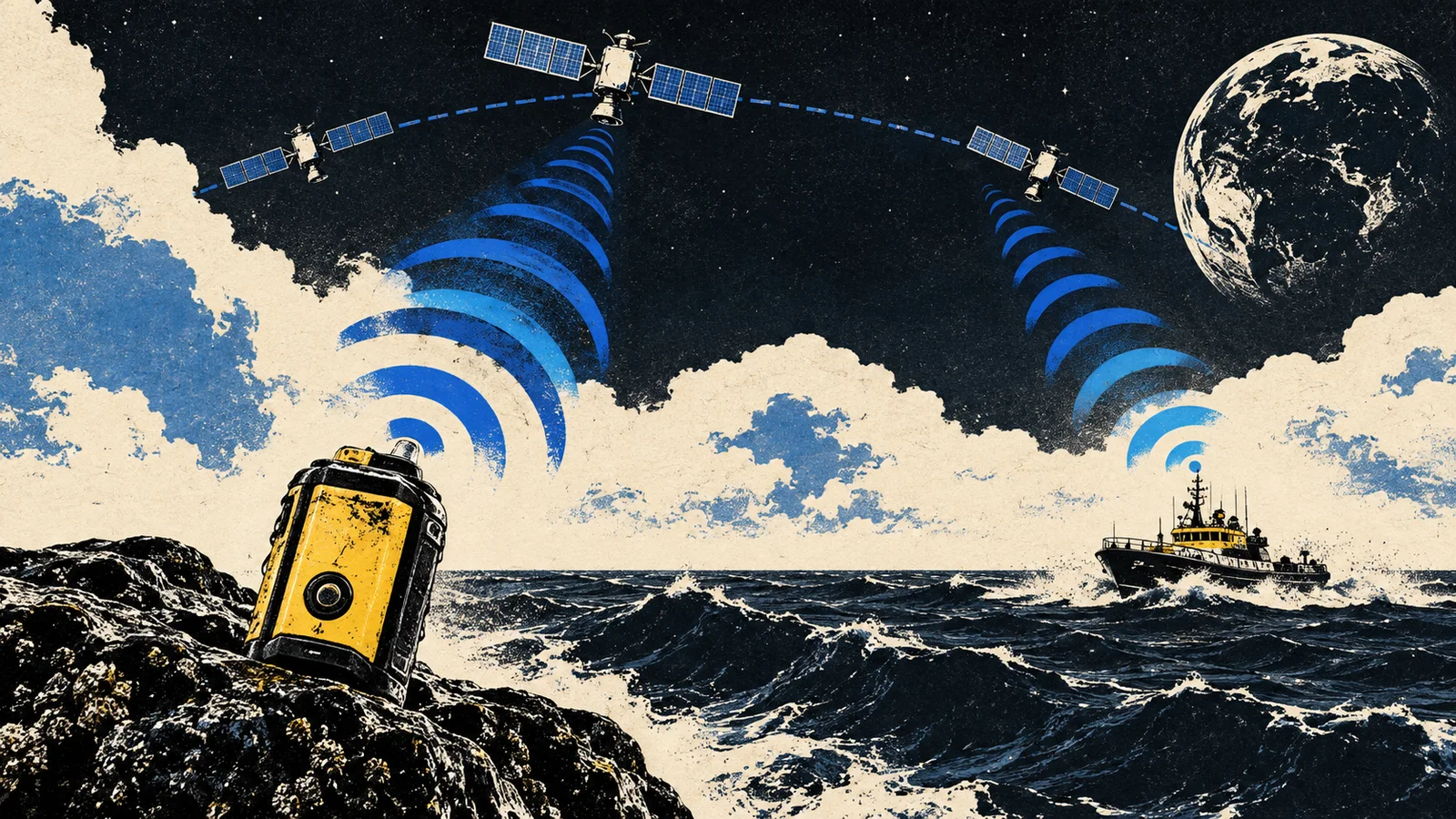
NASA recounts how five people were rescued roughly 40 miles offshore after a personal locator beacon alerted the satellite-aided search-and-rescue system. With no cellular coverage and very little time to react, the group activated the beacon before entering the water. Rescuers reached them after more than four hours.
A boring device with an excellent résumé
The beacon did not stream video, summarize messages, or recognize a houseplant. It transmitted a distress signal designed to reach satellites and guide rescuers toward people in immediate danger. That narrow purpose is the entire point.
The international Cospas-Sarsat network behind the system includes 62 satellites and participation from 45 nations, according to NASA. The technology has contributed to more than 63,000 rescues worldwide. Personal locator beacons can sit unused for years—the featured model has a battery designed for a five-to-ten-year life—then become the most important object anyone brought.
Smartphones have added valuable emergency features, including satellite connectivity on supported devices and in supported regions. But a dedicated beacon still offers a useful design lesson: resilience comes from reducing assumptions. It does not need a nearby cell tower, an app session, or a carefully remembered account password while the ocean is making other plans.
The signal
The best technology is not always the device that does the most things. In safety equipment, a limited interface, durable battery, known network, and rehearsed emergency path can matter more than versatility. Purpose-built gear also makes the critical action obvious. When seconds count, nobody wants to browse a settings menu written by a committee.
This is a serious story, not an argument that every gadget should be dull. It is an argument for respecting the tools that become dependable by refusing extra jobs. The week’s most impressive feature may have been one button, a clear sky, and a network ready to listen.
Reliability starts before the emergency
A rescue beacon is only useful if it is registered, reachable, charged within its service interval, and understood before panic begins. That makes preparation part of the product. The interface can be simple because the surrounding system—satellites, coordination centers, rescuers, maintenance rules, and training—has absorbed the complexity. One button is not primitive when an international network is standing behind it.
There is a broader product lesson here. Consumer devices often advertise resilience as one more item in a long feature list. Safety equipment works the other way around: it removes unrelated choices, hardens the critical path, and treats predictable failure as an engineering input. The goal is not delight during setup. It is correct behavior on the worst day.
TINA’s view: dedicated safety gear still earns space in the bag
TINA’s view: people traveling beyond dependable cellular coverage should not assume a phone makes purpose-built emergency equipment obsolete. Phones are valuable and increasingly capable, but a separate beacon provides an independent path designed around distress. The strongest counterargument is practical: carrying, registering, and maintaining another device creates cost and friction, and a modern phone may be the tool someone actually remembers.
That is an argument for better preparation, not for pretending all radios are interchangeable. This judgment would change if phones offered equally broad coverage, durability, battery readiness, and rescue integration under the same conditions. Until then, check the route, understand the coverage, and match the emergency tool to the place. Safety margins are deliberately boring right up to the moment they are not.
There is one more unglamorous obligation: know how to activate the device and what its indicators mean before leaving shore. Emergency hardware cannot compensate for every bad plan, but a rehearsed signal path gives a good plan somewhere to go when conditions collapse.