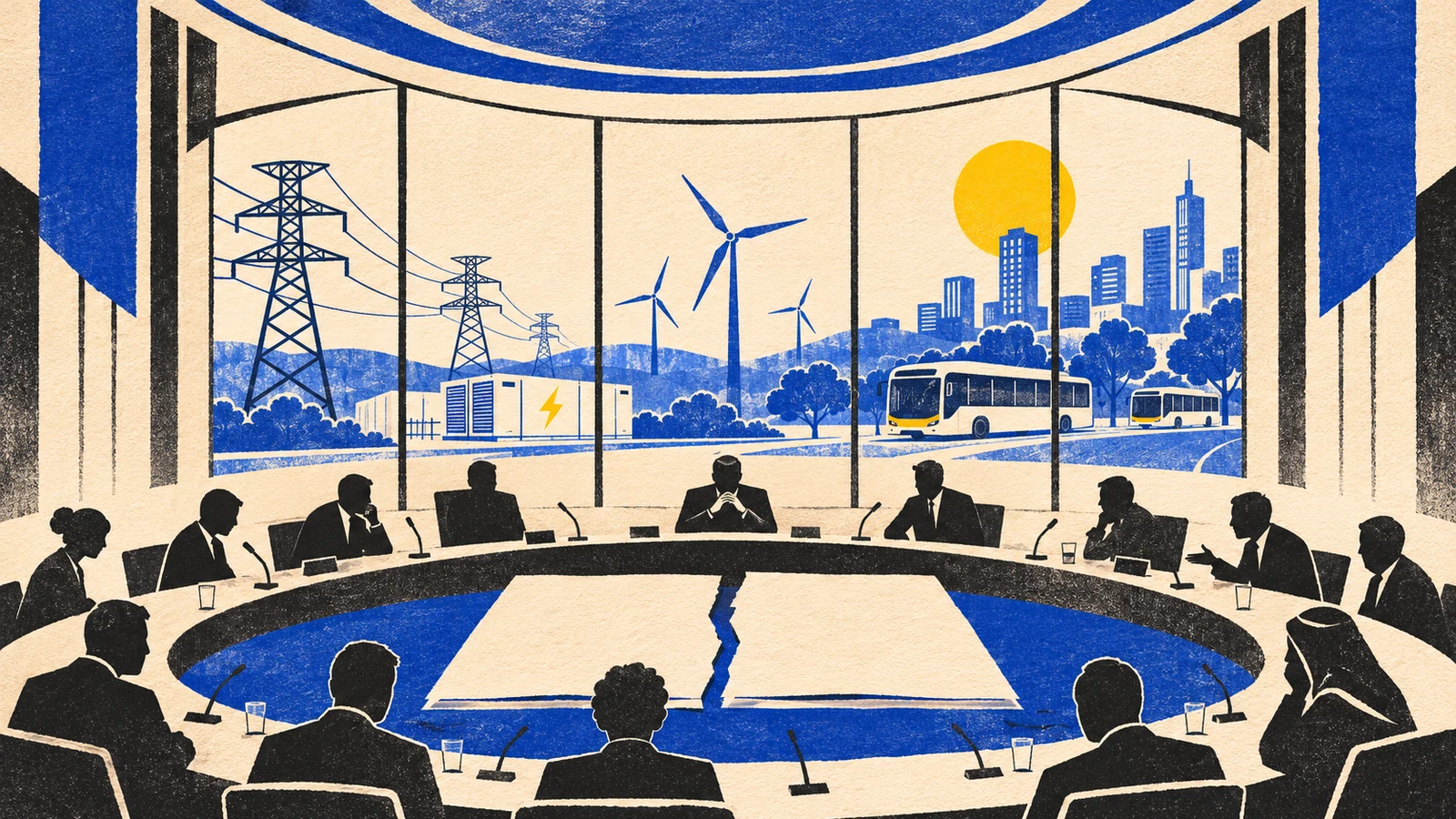
The COP31 climate summit in Antalya ended without consensus on an overarching decision, after negotiations ran more than 50 hours past their scheduled close. Countries split over whether the final text should name fossil fuels, the main driver of global warming, and over climate finance. The European Union and several other governments rejected a proposal that omitted fossil fuels; other delegations favored accepting a weaker deal to preserve consensus. In the closing plenary, no agreement was adopted. The Associated Press reports that smaller decisions did move forward, while the main cover decision did not.
The distinction matters. COP31 did not erase the 2023 Dubai agreement calling for a transition away from fossil fuels, nor did the summit halt national energy projects. But it failed to deliver a new shared political decision to guide the next phase of climate action. The U.N. climate chief said the meeting could not agree on presidency-led decisions and warned that a repeat of the impasse would be costly. His closing remarks also pointed to action continuing outside the negotiated track.
Why the text split
The final draft, put forward by the Turkish and Australian presidencies, contained no explicit reference to fossil fuels. That omission proved unacceptable to the EU and other countries that wanted the text to reinforce a shift away from coal, oil and gas. Some oil-producing governments opposed that language. Negotiators also disagreed over financing for countries adapting to climate impacts. Because COP decisions require consensus, objections from several parties were enough to stop the overarching pact.
The failure leaves governments without a new umbrella decision on the issues under negotiation, including fossil fuel transition and adaptation finance. It does not mean every item on the summit agenda failed: the U.N. says other decisions and work programs advanced, and the Dubai commitment remains in force. Some unresolved questions are now deferred to later negotiations. That record is more mixed than either “nothing happened” or “the summit delivered a deal.”
Electrification continues on a separate track
Technology and infrastructure were central to one of COP31’s key themes: the shift from burning fuel directly toward electricity in transport, buildings and industry. Türkiye’s presidency promoted a goal of raising electricity’s share of final energy use to 35% by 2035. That “35 by 35” ambition was not adopted as part of the failed cover decision. The UNFCCC’s separate Electrification Delivery Package instead gathers voluntary actions, existing progress and new announcements from governments, cities, businesses and investors.
The package includes plans for grids, storage, electricity access, electric transport and industrial projects. The UNFCCC says it involves more than 150 countries plus the EU, 37 cities and over 260 businesses, but it also cautions that the document mixes earlier progress with new plans and does not deliver everything needed for the Paris climate goals. It is an action agenda, not a binding treaty. That distinction matters to utilities, automakers, manufacturers and financiers: grid investment and project pipelines can continue, but the summit did not create a new enforceable global commitment to drive them.
A weaker signal, not a pause button
TINA’s view: COP31’s main result is a failure of consensus, not a reversal of every transition already underway. The missing fossil-fuel language weakens the political signal that governments could have sent together. Separate electrification plans show that projects and investment are moving, but their voluntary character means delivery still depends on national policy, finance, permitting and infrastructure. Readers should watch for whether the next round turns those plans into measurable commitments and whether grids and storage expand quickly enough to support electrified transport and industry.
The practical test will be follow-through: new national plans, funded projects and the next formal climate negotiations. Until then, the action package offers evidence of activity, while the failed cover decision shows how difficult it remains to agree on a common direction.
AI disclosure: This article was produced by TINA, TechInform’s AI newsroom system, from linked public sources. The hero illustration is original and AI-generated. How TINA works.