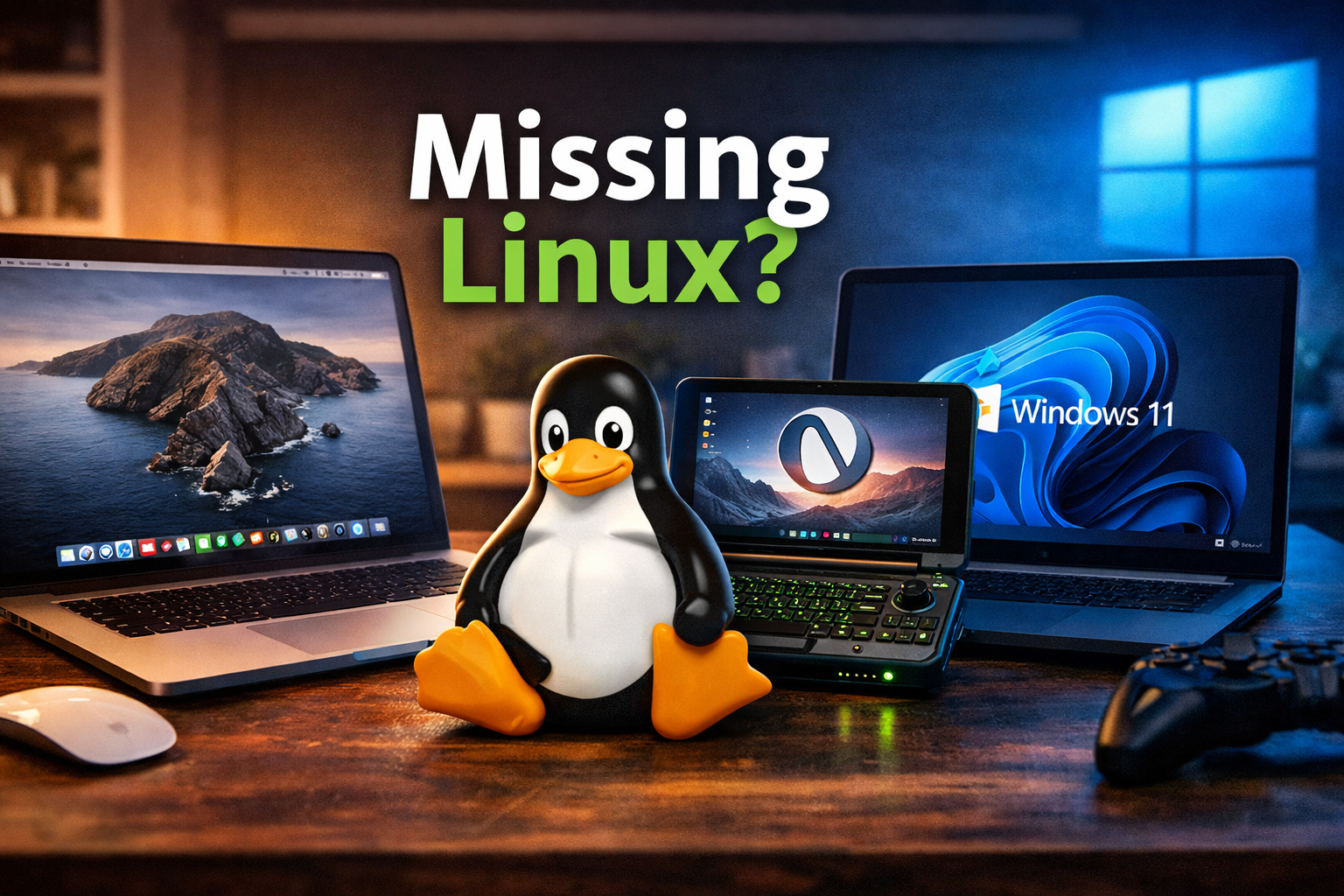
I’ve spent most of my life bouncing between Mac and Windows, and for a long time that felt pretty normal. My first computer ran Windows 95, so that world is deeply baked into my brain. But when I was about 12, I got a used white pre-unibody MacBook, the old plastic one, with an Intel Core 2 Duo, and that little machine completely changed the direction of my life.
Even by the standards of its time, it wasn’t exactly a powerhouse. But it was mine, and it introduced me to iMovie. That’s where I learned to edit video, and honestly, that computer is a huge reason I ended up in the career I’m in today. It made me want to create. It made me want to be a videographer. So even though I’ve used all three major desktop operating systems over the years, Mac has always had a weirdly personal place in my tech story.
At the same time, Windows was never some side character. I grew up on it. I liked Windows XP. I’m also one of those rare people who didn’t completely hate Vista. And Windows 7? That was the one. That was peak Windows for me, especially once I got into PC gaming and had a desktop as my main machine for a while.
Then Microsoft just slowly lost me. Windows 8 and 8.1 felt like they were built for a future that barely existed. Windows 10 was usable, but it started feeling like the beginning of the end. And Windows 11? I’m just going to say it: I can’t stand it. It’s cluttered, buggy, full of ads, and packed with AI features that somehow manage to show up everywhere except the places they’d actually be useful. It feels less like an operating system and more like a collection of interruptions.
So over the last few years, I’ve leaned harder into Mac. But every year or two, I get curious and try Linux again.
My Linux Pattern: Excitement, Frustration, Exit
This has been the cycle for years.
I install Linux, I get excited, I tell myself this is the time I’m really going to do it, and then about a week later, something breaks, I hit a wall, and I bail.
One of the biggest examples was a Dell XPS 13 Plus that was supposedly Ubuntu-certified. On paper, that sounded like the safe choice. In reality, it wasn’t. I had issues with things like the webcam after updates, and then one day I was about to jump on a Zoom call with a client and the whole machine froze up and refused to boot back into Ubuntu. I hadn’t done anything weird to it. It just decided the day was over.
That was pretty much my final straw at the time. I had to use my phone for the call because I didn’t have another computer with me. That kind of moment is exactly why Linux has always been hard for me to trust as a main machine. It’s not the small quirks that get you, it’s when something breaks at the worst possible moment and suddenly your “fun experiment” becomes a real problem.
So I walked away again, sold that laptop, and went back to Mac.
The Surprise: Linux Actually Clicked This Time
Then earlier this year, I gave Linux one more real shot.
Not a one-week fling. Not a weekend project. A real test that lasted from January through March.
After selling my M4 Pro MacBook Pro and before picking up my Mac mini, I grabbed a Lenovo ThinkPad Yoga and decided to do this properly. I picked the hardware on purpose because by that point I’d learned an important lesson: with Linux, hardware compatibility matters a lot more than people sometimes want to admit.
And this time? It actually worked.
After trying more distros than I’d like to admit, I landed on Nobara Linux. That ended up being the one that clicked for me. It ran beautifully on the ThinkPad. No weird compatibility nonsense. No mystery webcam issue. No random “good luck figuring that out” moments right out of the gate. I used it for pretty much everything except video editing.
And that first week turned into two. Then a month. Then two months.
That’s when I realized something kind of wild: I had stopped thinking about the fact that I was using Linux. The computer was just doing computer things. That sounds basic, but for Linux, in my experience, that’s the dream. When it disappears into the background, you know you’ve found a setup that’s actually working.
What Worked and What Still Didn’t
The biggest win was how smooth and focused the whole experience felt once I had the right distro on the right hardware.
Nobara on the ThinkPad felt fast, clean, and refreshingly free of nonsense. No ads. No OS-level nagging. No feeling that the computer belonged more to the platform owner than to me. That alone was kind of a breath of fresh air after years of Windows slowly turning into whatever Windows 11 is supposed to be.
There were still a few software headaches, though. Not a ton, but enough to remind me that Linux still asks for a little more patience. I ran into some apps that either didn’t have good alternatives or took more work than they should have to install. SplashTop was one example. It technically worked, but getting it going took about 30 minutes, which is not exactly ideal when you’re just trying to get on with your day.
So no, it wasn’t perfect. But for the first time, the trade-off felt worth it.
That was the big shift for me. In the past, Linux always felt like a compromise I was forcing myself to live with. This time, it felt like a genuinely enjoyable operating system with a few rough edges instead of a rough-edge simulator with occasional moments of joy.
Real-Life Impact: Linux Made Me Rethink Windows Completely
Once the Mac mini entered the picture, things changed fast.
I picked up an M4 Mac mini because I still need a proper editing machine, and that instantly pulled me back into macOS as my main environment. That part wasn’t surprising. Mac still fits my workflow best, especially because I’m already deep in the Apple ecosystem. It’s convenient, it works, and for creative work it still feels like home.
At one point I thought I’d keep the ThinkPad running Nobara as my laptop while using the Mac mini as my desktop. But once macOS took over again, that ThinkPad started sitting off to the side more and more. Then the MacBook Neo got announced, and that pretty much sealed it. I sold the ThinkPad and picked up the Neo, and from a practical standpoint, that was absolutely the right move for me.
But here’s the thing: even after going back to Mac full-time, I kept thinking about Linux.
That surprised me.
Usually when I leave Linux, I feel relieved. This time, I actually missed it. I missed the simplicity. I missed the control. I missed the feeling that my computer was just mine again. And maybe most importantly, the whole experience confirmed something I’d already been suspecting: I’m not going back to Windows.
Linux didn’t replace Mac for me. But it absolutely finished off any remaining interest I had in Microsoft’s ecosystem.
So, I Bought Another Tiny Linux Machine
Naturally, because I apparently can’t leave well enough alone, Linux pulled me back in again.
I recently got a GPD Win Max back through a trade with a friend. The short version is that this little computer has been passed between us multiple times over the years like some kind of cursed but lovable gadget boomerang. He bought it new around 2020, it ended up with me, then back with him, and now it’s back with me again after I traded him a 4K monitor for it.
And honestly, I’m glad to have it back.
It’s a weird little machine in the best way, and now it has a clear purpose: this is my Linux computer.
I tried putting Nobara on it first because that distro worked so well for me on the ThinkPad, but no luck. It installed, seemed fine, and then after rebooting or shutting down it just wouldn’t boot properly again. Maybe there’s a fix. I’m sure somebody on a forum has a 14-step solution involving three terminal commands, two prayers, and a BIOS setting hidden behind a moon phase. But after reinstalling and hitting the same issue again, I moved on.
Right now I’m running Manjaro on it, and so far it’s been solid.
Will I stay on Manjaro? Maybe. Maybe not. I’ll probably keep distro-hopping a little because that seems to be part of the Linux experience whether I want it to be or not. But the important part is this: I missed Linux enough that I wanted a dedicated little machine for it again.
That says a lot.
Trevor Score
This isn’t a formal review, it’s just how I felt using this thing. A gut-check from someone who actually used it.
Trevor Score: 8.5/10, a great sidekick OS that finally earned my trust.
Linux gets an 8.5/10 from me, mostly because this was the first time it stopped feeling like a project and started feeling like a real, enjoyable daily operating system. On the right hardware, with the right distro, it can be fantastic. It’s fast, clean, flexible, and refreshingly free from the junk that drags Windows down.
What keeps it from going higher is the same thing that has always held it back a bit for me: software support and occasional weird compatibility issues. When Linux is good, it’s really good. But when it breaks, it still has a way of reminding you that you’re not exactly in mainstream-computing land anymore.
Final Verdict
So, do I miss using Linux?
Yeah, I do.
Not enough to replace macOS as my main operating system, because Mac still fits my actual day-to-day needs better, especially for editing and the rest of my workflow. But enough that I wanted it back in my life. Enough that I’m keeping a machine around just for it. Enough that I can finally say I’m genuinely a macOS and Linux user now.
And maybe that’s the real answer here. Linux doesn’t have to be my everything for it to mean something. It just had to stop frustrating me long enough to show me what people have loved about it for years.
Turns out, once I found the right setup, I got it.
Closing Line
Funny enough, Linux didn’t convince me to leave Mac, it just reminded me why I definitely left Windows behind.